Get Full Government Meeting Transcripts, Videos, & Alerts Forever!
Get email alerts on the Education Legislation topic
No spam. Unsubscribe anytime.
Greeley School District No. 6 board briefed on draft state bill to expand 504 review and possible federal changes to special‑education oversight
Summary
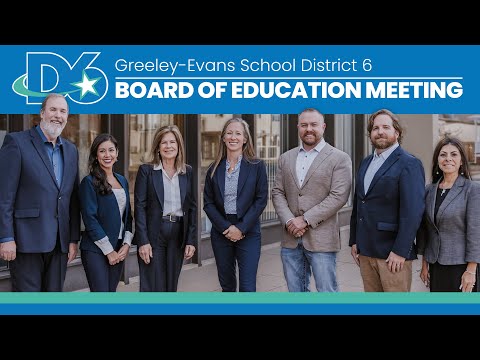
Nate Fall, who delivered the legislative update to the Greeley School District No. 6 Board of Education at its work session, warned board members about an early draft titled “enhanced protections for 504 and K‑12 schools” that would expand the Colorado Department of Education’s role in reviewing disability-discrimination complaints.
Nate Fall, who delivered the legislative update to the Greeley School District No. 6 Board of Education at its work session, warned board members about an early draft titled “enhanced protections for 504 and K‑12 schools” that would expand the Colorado Department of Education’s role in reviewing disability-discrimination complaints. “It kind of establishes grievance procedures that aren't necessarily aligned with federal law,” Fall said, urging the board to track the bill as the 2026 General Assembly approaches.
Why it matters: The board heard that the draft could change how families’ claims about services for students with disabilities are reviewed and resolved. Fall said the proposal is a state-level response to shifting federal enforcement at the U.S. Department of Education and the Office for Civil Rights. He also warned the district could face added workload or legal complexity if state procedures diverge from federal requirements.
Fall told the board the 2026 session begins Jan. 14 and that stakeholders are drafting bills now; he urged directors to raise any concerns through the district’s lobbyist and staff. Fall also discussed a federal proposal under consideration to move the Individuals with Disabilities Education Act (IDEA) from the U.S. Department of Education to the Department of Health and Human Services, calling that a potentially significant change for monitoring, funding and enforcement of special education. “If they were to transfer funding and oversight to HHS, that would be significant,” he said.
Board members repeatedly emphasized uncertainty. Director Campos Pizzi and others noted that IDEA predates the Department of Education and that many details remain unknown, including whether funds currently administered at the federal level would shift to states. Directors asked staff to help inform legislators about practical impacts and to coordinate advocacy during events such as CASB’s day at the Capitol.
Fall also updated the board on the ongoing federal government shutdown at the time of the meeting, saying the district had not yet seen direct funding interruptions but that SNAP disruptions could affect direct certification for free school meals. He noted a reported court decision in another state and estimated that contingency funds were being used at about 65 percent in certain contexts; the board said it would watch for any local operational effects.
The board took no formal vote on the legislation; members directed staff to monitor draft bills, liaise with the district lobbyist and report back if changes could affect funding, compliance or district workload. Fall said he would continue to inform the board as bills are introduced and sponsors are identified.