
Kenosha County hears Axon pitch for proposed 10-year, roughly $12 million body-camera and TASER contract
Get AI-powered insights, summaries, and transcripts
Sign Up Free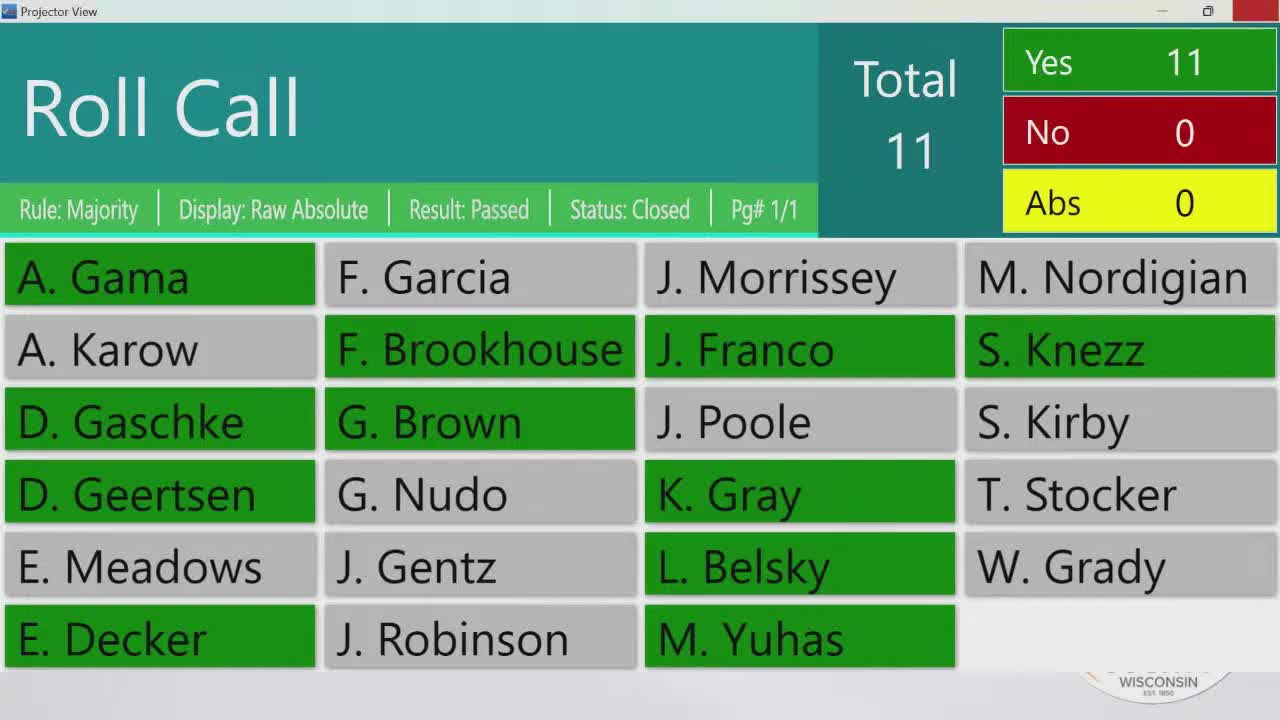
Summary
Kenosha County supervisors received a detailed presentation Tuesday from the sheriff—s office and Axon on a proposed 10-year, approximately $12 million contract for body-worn cameras, in-car systems and TASER 10 devices.
Kenosha County supervisors received a detailed presentation Tuesday from the sheriff—s office and representatives of Axon on a proposed 10-year contract, roughly $12 million, to supply body-worn cameras, in-car systems and TASER 10 devices.
Captain Tony Gonzalez of the Kenosha County Sheriff—s Department opened the item by saying the department tested equipment during County Thunder and routine patrols to identify technology that would "best meet our operational needs, enhancing transparency, and providing long term reliability for the agency." Gonzalez said the review followed ongoing problems with the current vendor that prompted the search.
Axon—s main contact, Luke Baldwin, summarized the company—s pitch, saying Axon—s package combines cameras, evidence management and equipment refreshes to reduce administrative burdens on officers. "Our mission is to protect life, capture truth, and accelerate justice," Baldwin said, and he told supervisors Axon builds features such as automated tagging, AI-assisted redaction and transcription to speed case review.
The presentation included several technical and contract details that drew questions from supervisors. Axon said the Body 4 camera family is designed for a 12-hour shift and the device can provide up to about four hours of recorded footage per cycle, with in-vehicle 'quick-disconnect' charging available for longer recording needs. The company also described auto-activation features that can trigger recording when a deputy draws a firearm or turns on a patrol vehicle—s lights and siren.
Axon showed TASER 10 as the current-generation energy weapon in the package and said it offers a longer effective range; the company stated the TASER 10 has an effective maximum range of about 45 feet. Axon representatives said hardware refreshes are built into the proposed contract: body cameras would be refreshed roughly every 2.5 years, TASER refreshes at about five years and vehicle camera refreshes on a separate cadence.
Axon described several AI-driven capabilities, including a real-time translation feature and a "Draft 1" automated transcription. Kirk Henderson, a senior professional manager with Axon, said the translation tool can support many languages and that agencies can use live translation with or without recording. "You will get somebody 24/7 live," Henderson said of Axon—s help-desk support.
On data, Axon confirmed the evidence management and cloud services would be hosted on Microsoft Azure. Baldwin said the district attorney—s office can be set up as a partner in Axon—s evidence system and that creating that connection "has no cost to create that partnership connection," enabling one-click sharing while preserving audit trails.
Supervisors pressed for money and scope details. Supervisor Franco referenced a figure in the presentation, saying the proposed 10-year package was "a little over $12,000,000." Axon staff and county finance staff said hardware typically composes roughly 30—6% of the contract value and recurring cloud/software and storage costs make up the remainder.
County finance staff (Patty) gave a fiscal analysis tied to accounting rules and GASB 96. Patty told supervisors about $771,000 of the annual cost could be capitalized as hardware and about $457,000 would be an operational (software/cloud) expense each year under the current analysis.
Supervisors and Axon also discussed quantities and logistics: Axon and county staff said the project would cover roughly 300 body cameras (about one per deputy), about 130 TASER units, and upfitting about 110 squad cars; the county—s current fleet already includes automated license plate readers on some vehicles. Axon said vehicle installation and data migration will take time; staff estimated migration of roughly 200 terabytes of data and recommended a transition overlap (about six months) so the current vendor—s service is not terminated before Axon is fully operational.
Several supervisors asked about long-term pricing and future purchases. Axon said the proposed 10-year pricing includes inflation escalators and built-in refreshes rather than locking in lower per-unit pricing that could leave agencies unable to adopt new features released during the decade. Baldwin said the company targets several new software features per year and the subscription-like model is intended to make those features available without renegotiating contracts.
County staff compared costs to the current vendor (referred to in the presentation as "Utility"). The county reported the present five-year cost with the incumbent is about $803,000 per year; the Axon plan was described in the hearing as approximately $1.228 million per year on the county—s annualized comparison, a difference county staff flagged for supervisors to weigh against features and refresh terms.
No final action was taken Tuesday. County staff reminded supervisors there will be a joint meeting of finance and judiciary & law Thursday at 6 p.m. to review the resolution packet, which will include the detailed line-item quote and the formal resolution for committee consideration. Supervisor Decker moved to adjourn at the close of the item; Supervisor Brown seconded and the board voted to adjourn.
What happens next: the resolution packet with a line-item breakdown will be reviewed in committee Thursday evening before any county board vote. The board will consider capital vs. operational treatment and whether the added functionality and refresh schedule justify higher annual costs compared with renewing the incumbent contract.