
DeKalb elections board debates SB 189 compliance, seeks state guidance on registrants using nonresidential addresses
Get AI-powered insights, summaries, and transcripts
Sign Up Free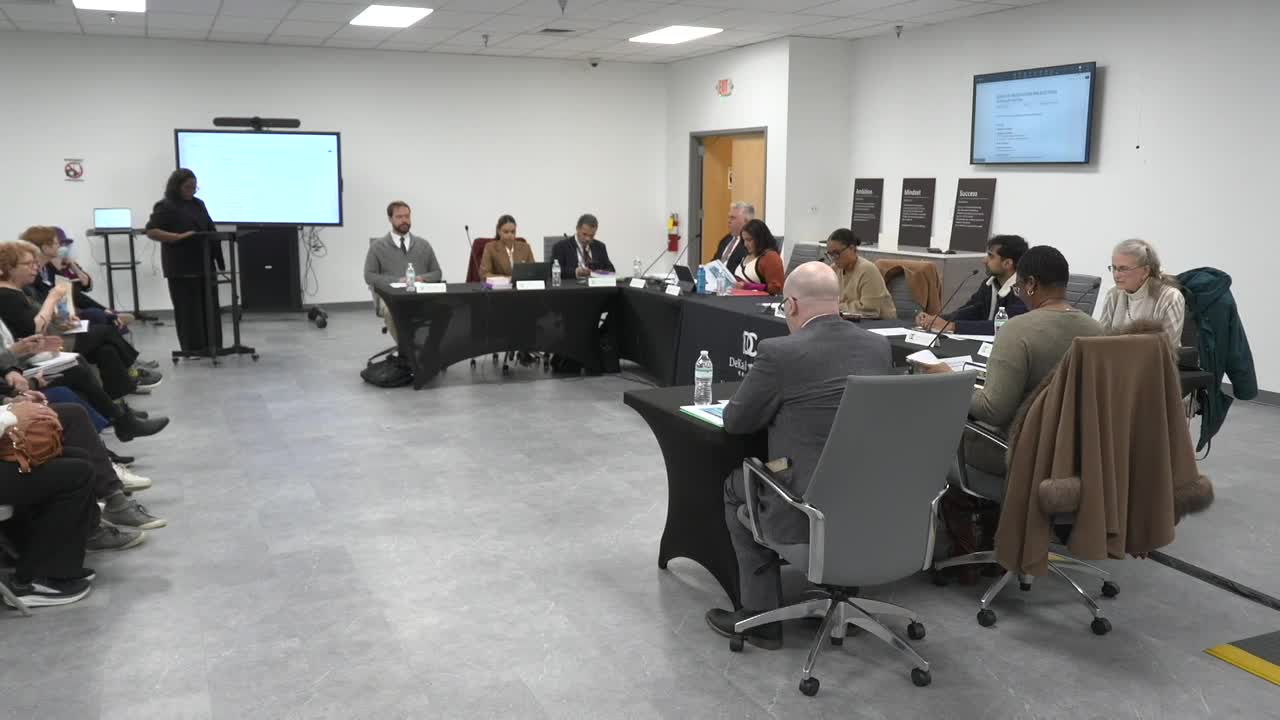
Summary
Board members debated how to implement SB 189’s ban on post‑office boxes and private mailboxes as proof of residency, with some urging expedited removal procedures under county code and others cautioning about protections for homeless voters and domestic‑violence survivors.
The DeKalb County Board of Registration and Elections spent a substantial portion of its meeting discussing county implementation of SB 189, a state law that clarifies that a post office box or private mailbox service does not by itself establish residency.
Board member Gail Lee read language from the code and said counties can pursue list‑maintenance hearings (2‑28 procedures) to examine elector qualifications. "If the information is false to begin with, it should have been rejected at the beginning," Lee said, arguing that an expedited removal process exists in code for false registrations.
Director Smith told the board the department’s operational process has not changed: when the office receives a registration that appears to use a nonresidential address, staff send a letter informing the registrant they must provide an updated address and that a deadline applies. "There is a deadline — it's a 30‑day clock with a mailing cushion that averages 40 days," Smith said, describing the inactive‑status process that follows nonresponse.
Other board members urged caution. Board member (identified in the transcript as a long‑serving member) recalled prior discussions in which state officials had not provided a consistent process allowing people who are homeless, victims of domestic violence or otherwise unable to provide a residential address to register and vote safely. "We do not have the authority to establish that," the member said, urging the State Elections Board and the Secretary of State's office to provide guidance.
Several members noted practical concerns: some registrants use mailbox services for legitimate safety or accessibility reasons, while others could exploit virtual mailboxes to register at non‑local addresses. The board discussed whether to hold an ad‑hoc 2‑28 hearing to remove registrations that fail to cure but several members said they were not inclined to do so without clearer statewide guidance.
The board directed staff to continue following the state's notice process, circulated the cited code references to members for review and agreed to add the topic to the agenda of the specially called Nov. 17 meeting if further action is required.