Get Full Government Meeting Transcripts, Videos, & Alerts Forever!
Get email alerts on the Animal Regulation topic
No spam. Unsubscribe anytime.
Tulsa commission endorses draft ‘Type C’ breeder license, recommends city council review
Summary
The commission voted to recommend a new Type C commercial-animal-establishment ordinance—covering breeders and transfer/wholesale activity, requiring city licensing, a 20-year background check and record-keeping—and to forward the draft to City Council; penalties in the draft match the city maximum (a $1,200 fine and/or six months jail).
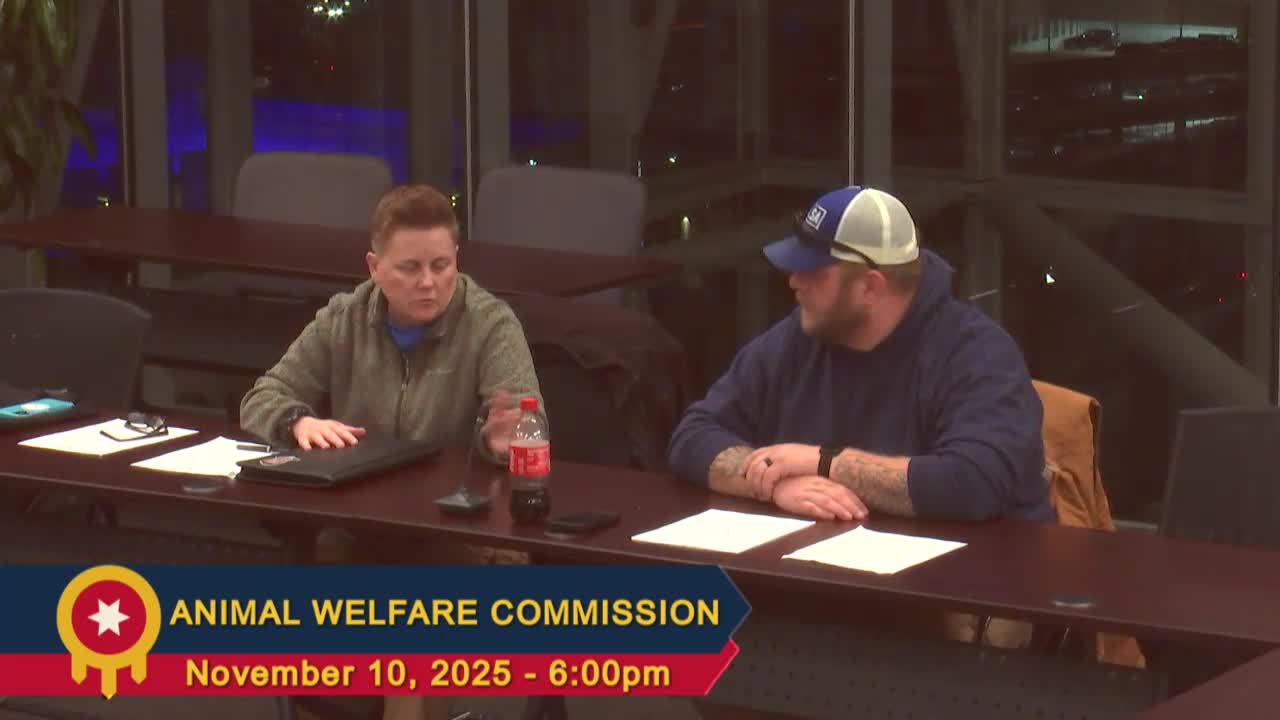
The Tulsa Animal Welfare Commission voted at its Nov. 30 meeting to recommend that the City Council consider a new “Type C” commercial-animal-establishment category to regulate breeders and other transfer/wholesale activities.
Staff explained the draft would close a gap in the municipal code by requiring a city license for anyone breeding dogs or cats for retail sale, transfer or wholesale trade — whether for a fee, a donation or no fee. The proposed Type C license largely mirrors health-record, husbandry and documentation requirements in the existing Type B category and would subject applicants to a 20-year background check. Staff said convictions for animal abuse, illegal breeding or violations under the Oklahoma Commercial Pet Breeders Act could be grounds for denial or revocation.
The draft ordinance also codifies an exemption for bona fide 501(c)(3) rescues that operate for animal welfare rather than profit; staff said annual checks and inspections would be part of licensing oversight and that an organization that falls out of good standing could be required to obtain a commercial license.
Commissioners asked about fee amounts and enforcement. Staff said application and renewal fees for Type C are not set until the ordinance is codified and that the draft sets the city’s maximum penalty for violations — a $1,200 fine and/or six months in jail — pending the city’s approval process. The commission moved to recommend the draft and voted to forward the ordinance to City Council; the vote passed.
The commission did not set final fees or implement enforcement changes; those items will be determined as the ordinance moves through the council and codification process.