
Skagit County officials ask Anacortes for $500,000 toward regional STAR Center
Get AI-powered insights, summaries, and transcripts
Sign Up Free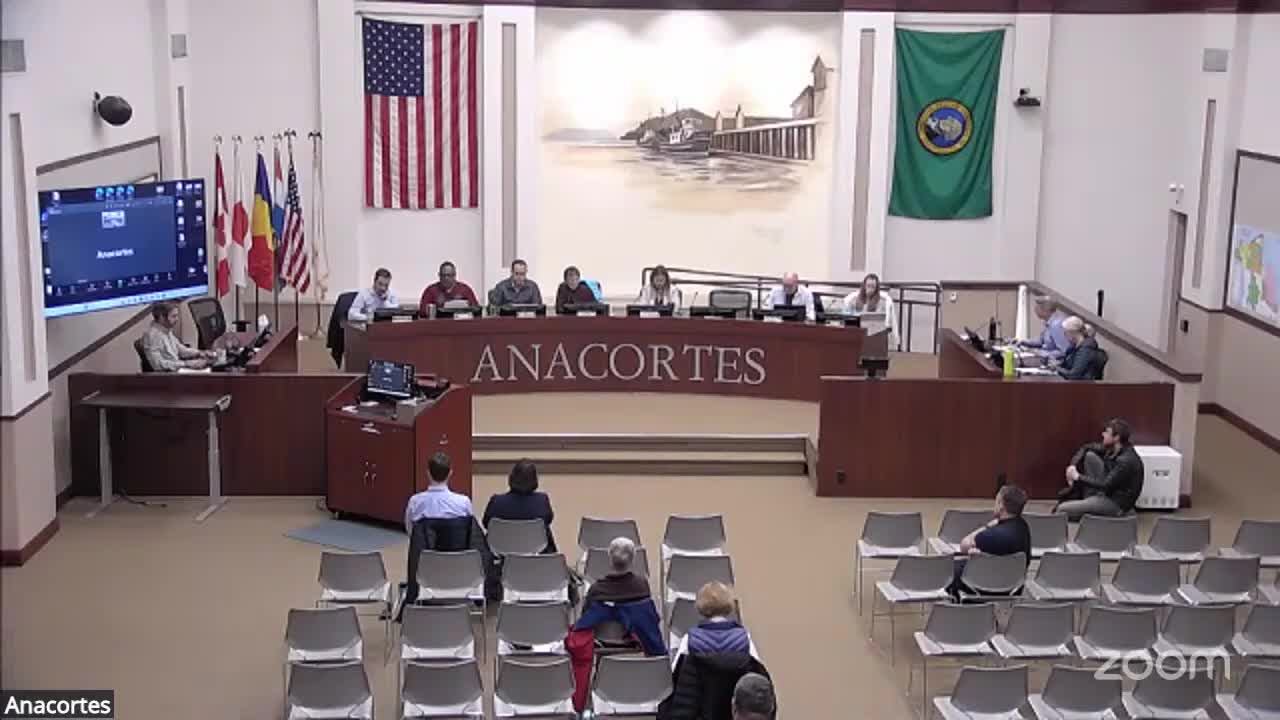
Summary
Skagit County Commissioner Lisa Janicki and county public-health staff asked the Anacortes City Council to consider a $500,000 startup contribution to the North Star regional plan, which would pool opioid settlement funds to finance detox bridge housing, recovery housing and a new STAR Center.
Skagit County Commissioner Lisa Janicki and county public-health officials asked the Anacortes City Council on Monday to consider contributing to a regional effort to use opioid settlement funds for detox services and recovery housing.
"I'm gonna be asking the Anacortes city council for half a million dollars to go toward the startup cost of that STAR Center so that we can get this thing started for Skagit County," Janicki said in the council chambers, framing the request with a personal account of losing her son to an overdose.
Public Health Director George Kosevich outlined the North Star proposal: pooled, multi-jurisdictional funding focused on (1) short-term detox bridge housing, (2) transitional recovery housing and (3) a STAR Center that would provide crisis stabilization, detox and co-occurring treatment beds. Kosevich said roughly $2.6 million–$3.0 million has been received to date and that county receipts will roll in at about $500,000 per year over a roughly 17‑year timeframe.
Kosevich said the STAR Center operator plans to staff the facility to accept law-enforcement drop-offs and to bill Medicaid and private insurers once services are in place. "The startup funding is primarily needed" for the facility to hire staff and establish contracts, he said, adding that the county is building in outcome reporting and contract requirements to track results.
Resident Susan Hill urged the council to back the regional plan rather than allow unrelated local requests to dilute settlement funding. "Please make the right choice and pledge to the North Star project," Hill told council, noting she believes Anacortes has already used about $350,000 of its settlement funds to date and urging pooled regional spending to secure higher-cost services such as detox and transitional housing.
Council members pressed county staff on program details and sustainability. Councilmember Fantini said he supports pooling funds but raised concerns about sustaining a facility after one‑time settlement funds are spent; Janicki and Kosevich said the county’s financial model anticipates that billing revenue (Medicaid/private insurance) will cover most ongoing operating costs once the facility is up and running, though they acknowledged federal policy risks could affect those revenues.
Several council members, including Walters and Young, voiced support for the concept and said local experience with encampments and co-occurring substance‑use and mental‑health needs made the services relevant to Anacortes. Staff said further detail on the interlocal agreement, contract and RFP processes and metrics for reporting outcomes will be provided in follow-up materials and that city councils are being asked to make budget decisions by the end of the year.
Next steps: the county will prepare a formal request and interlocal agreement language for participating cities, provide a clearer breakdown of startup versus ongoing funding, and supply reporting metrics for council review ahead of any funding commitment.