
Spokane council approves scattered-site shelter contracts and names Compassionate Addiction Treatment operator despite neighborhood opposition
Get AI-powered insights, summaries, and transcripts
Subscribe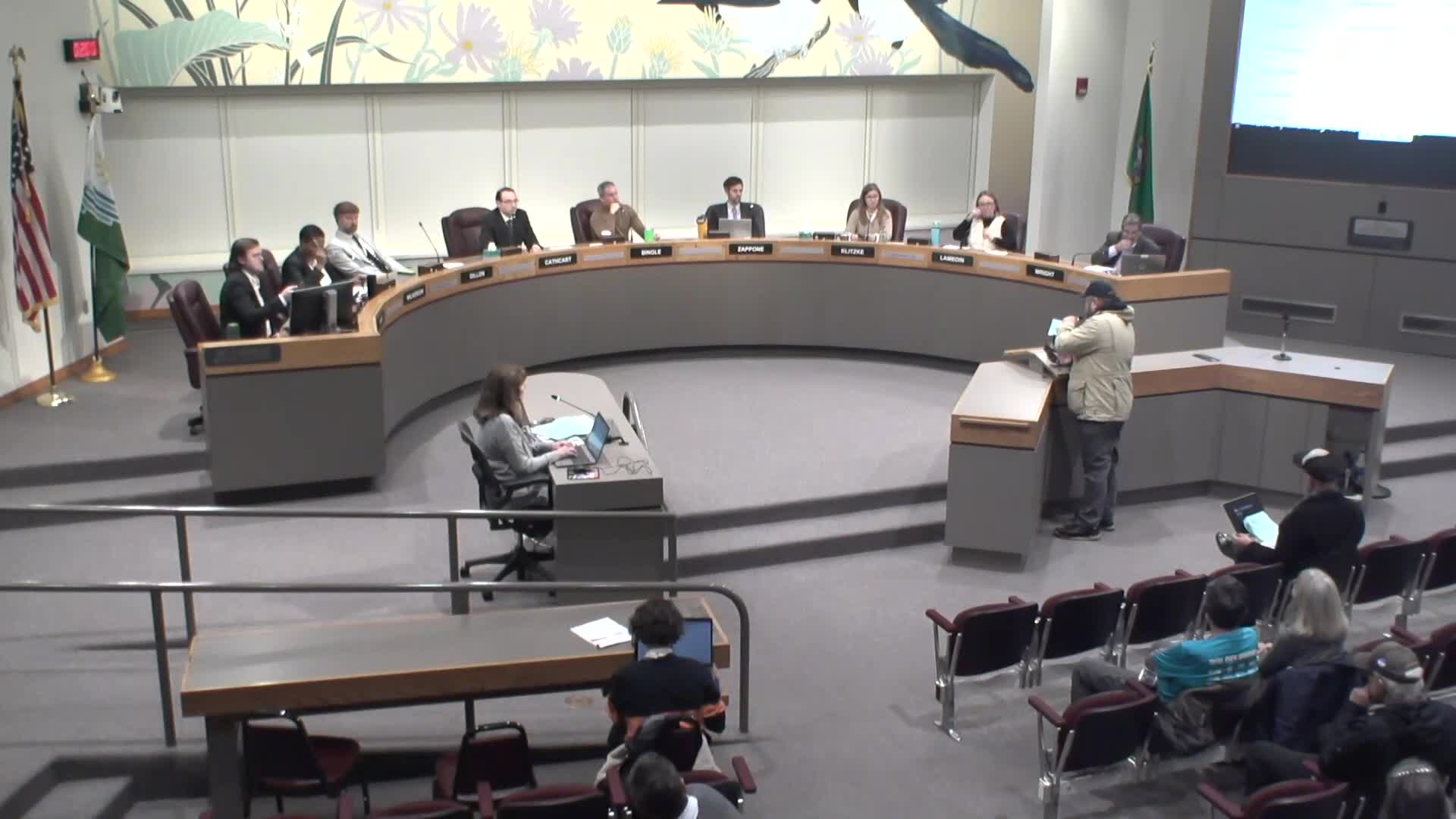
Summary
The Spokane City Council approved three related items including authorization to contract for scattered-site shelter services and designated Compassionate Addiction Treatment (CAT) as operator of the New Roots Tiny Home Village; the package passed largely along a 5-2 split after extensive public testimony from both supporters and opponents.
The Spokane City Council on Nov. 11 approved a package of scattered-site shelter actions that included authorization to enter contracts for encampment resolution and shelter services and selection of Compassionate Addiction Treatment (CAT) to operate the New Roots Tiny Home Village.
Supporters including Jules Helping Hands and Westminster United Church of Christ said scattered-site shelters reduce barriers for medically fragile, neurodiverse and LGBTQIA residents, increase case-management engagement, and are cost-effective alternatives to congregate shelters. Sandy Monk, interim executive director of CAT, told the council the New Roots project would offer 30 pallet homes and connections to partner providers such as Dignified Workday, Career Pass Services and Jules Helping Hands.
Opponents, notably residents from West Hills, warned that clustering services in one neighborhood concentrates impacts. Speakers raised concerns about crime, neighborhood disruption and a lack of upfront information; one resident cited press reporting about long-term obligations tied to waste-to-energy contracts and questioned fiscal priorities. Council members acknowledged the concerns while highlighting a citywide shortage of shelter capacity and the need for wraparound supports and surge beds this winter.
Council debate centered on whether the city is equitably distributing scattered sites across neighborhoods and whether the council’s oversight and public-engagement processes are sufficient. Council member Dylan said the items implement CHHS board recommendations and increase infrastructure where "we don't want people sleeping outside at night," while Council member Bingo said District 1 has borne a disproportionate share of services.
The combined motion to approve the three identified consent items (labeled in the packet as items 16, 18 and 19) passed 5-2. The council also read Resolution 2025-92, which declared a special market condition and authorized scattered-site contracts in a total amount noted in the amended resolution as $885,565.33; councillors noted the agenda packet had previously listed a different figure.
The council directed staff to proceed with contract execution and noted that council may terminate contracts if services are not delivered as required. Several council members encouraged continued neighborhood outreach and the development of stronger 'good neighbor' agreements to mitigate impacts.
The council’s action does not change the terms of the federal, state or nonprofit grants involved; those funding streams were described during testimony as pass-through dollars often used for eviction diversion, CDBG-supported housing assistance and similar programs. The council vote was recorded as 5 in favor and 2 opposed.
Council members said next steps include contract finalization under the special market condition authority and continued communication with neighborhoods and service providers.