Agency review praises Academies of Oklahoma, flags low performance and remediation plans for eSchool and Virtual Preparatory Academy
Loading...
Summary
Agency reviews presented three virtual-charter academic program findings: Academies of Oklahoma scored 94/100 with robust early-college outcomes; eSchool Virtual Charter Academy scored 28/100 but reported new leadership and remediation plans; Virtual Preparatory Academy is growing but had insufficient student counts for full reporting in year one.
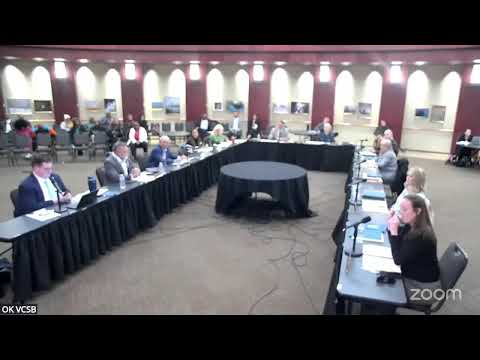
Agency staff presented academic program reviews for three authorized charters, telling the Statewide Virtual Charter School Board that the Academies of Oklahoma are a sustained bright spot while eSchool Virtual Charter Academy and Virtual Preparatory Academy are in active improvement phases.
The Academies of Oklahoma review noted board-level oversight of curriculum and assessment, the recent addition of a chief academic officer overseeing all sites, new PLC structures and a one-year curriculum and assessment implementation plan. The agency reported the school’s academic performance score for school year 2023–24 as 94 out of 100 and highlighted that 70% of the 2025 senior class left with an associate degree or enough college credit hours to be classified as a college junior. The reviewer also said the Academies received a $7,200,000 grant to support expansion and programming work in Seminole and other sites.
By contrast, agency staff reported the academic performance score for eSchool Virtual Charter Academy as 28 out of 100. The agency found only partial alignment between provided proficiency scales and the Oklahoma Academic Standards and noted the school recently restructured leadership (new principals and expanded roles). Staff described ongoing work to complete curriculum maps, scope and sequence documents and to align proficiency scales to state standards; additional reading teachers and intervention staffing were recently added, and the leadership team has proposed a new grading policy expected in January.
Virtual Preparatory Academy, the newest virtual charter authorized by the agency, is in year three of operations and currently expanding grade levels. Staff said the school uses a multi-tiered system of supports and student success teams that meet weekly, with quarterly teacher meetings and unit-based QUEST assessments to measure proficiency. The agency noted early-year performance reporting was limited by small n‑sizes (the school’s in-size was 10 while the state’s minimum reporting n‑size was 24) and that future performance frameworks will offer more complete data. Staff also highlighted partnerships that extend student opportunities, including concurrent‑enrollment arrangements and an aviation program in partnership with Norman Public Schools.
Board members asked questions about leadership oversight at eSchool, enrollment drivers for virtual providers, and the pace for correcting curriculum alignment issues. Agency reviewers emphasized that new leadership at underperforming schools has committed to stay through the current year and implement immediate academic changes.
The board heard these reviews as part of routine oversight and used the presentations to probe next steps for accountability, assistance and monitoring.