
Highland Village council backs insurer‑billing addendum for fire department, not resident balance billing
Get AI-powered insights, summaries, and transcripts
Sign Up Free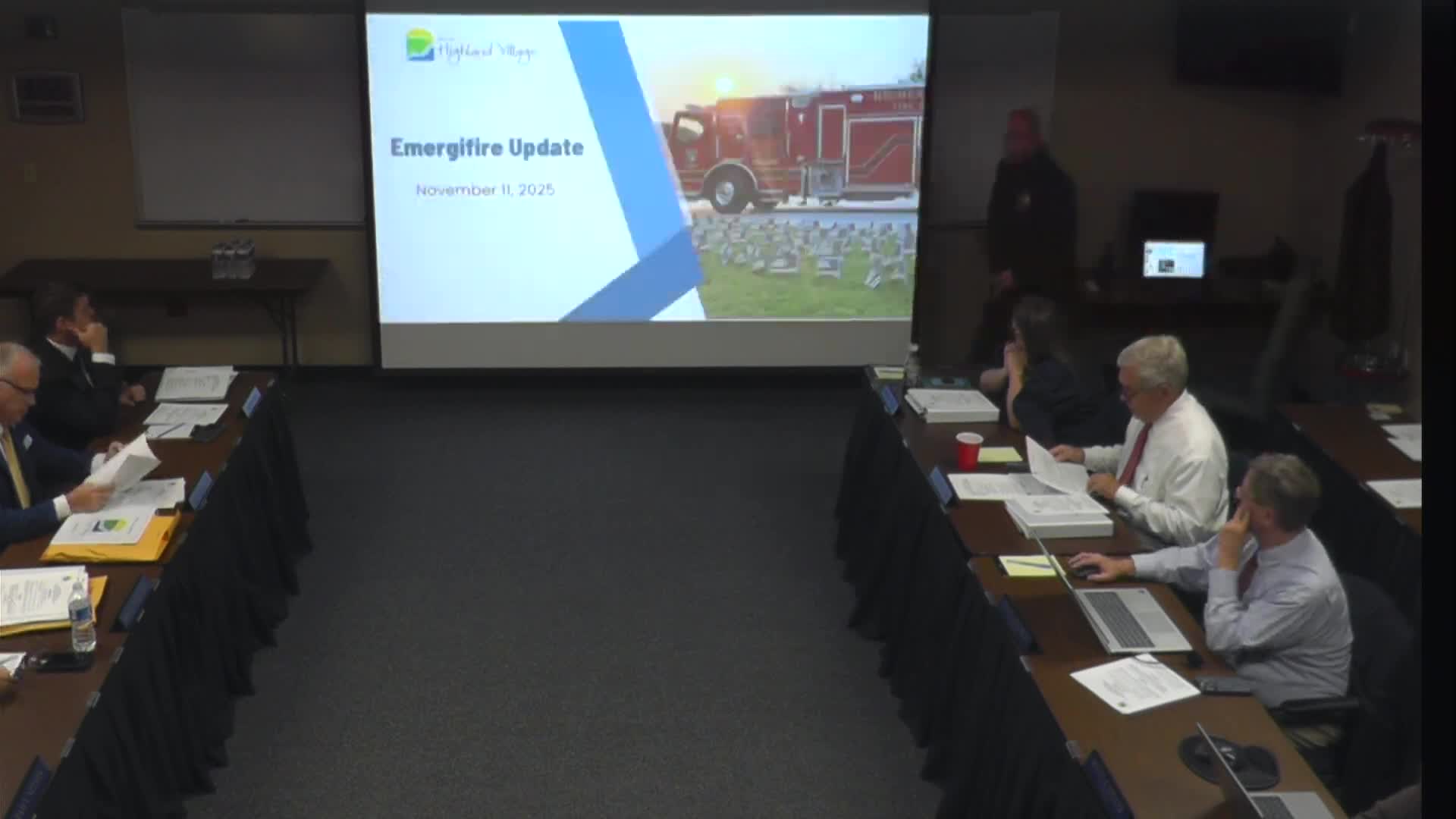
Summary
After staff presented a customizable addendum to the city’s EMS billing contractor to pursue reimbursement from insurers, council members directed staff to pursue a plan that bills insurance companies — not residents — and to return with contract language and ordinance language that formalize that restriction.
The Highland Village City Council directed staff to pursue a contract addendum enabling the city’s fire department to seek reimbursement from insurers for certain emergency responses, while avoiding direct billing of residents.
City staff presented a proposal for a third‑party billing addendum (materials referred to the contractor as “Emergify” or in other documents as "Emergicon") that would be added to the city’s existing EMS billing arrangement. The vendor would handle paperwork and claim filings and retain a percentage of collected reimbursements; staff said the service is structured so the city incurs no upfront cost. “It’s a no cost for the city,” the staff presenter said during the briefing.
Council members pressed staff on what incidents would be billed and who would ultimately be charged. Staff said agencies that use similar services typically bill insurers for motor‑vehicle incidents, gas leaks and vehicle fires and often do not bill for house fires. One presenter cited Lewisville’s decision to exclude resident balance billing and said some nearby departments capture many nonresident crashes on major corridors.
Several council members expressed concern about leaving an open contractual option that could allow a future council to bill residents if insurance claims go unpaid. “I just don’t want the residents harassed,” one councilmember said; another asked that the contract explicitly prohibit direct invoicing of residents except in narrow circumstances. Council members suggested the agreement could require insurer billing first and allow limited recourse only for habitual false alarms or deliberate acts.
Staff acknowledged the vendor does not project guaranteed revenue and that the city would need to collect better resident/nonresident data to estimate returns. Council gave staff direction to move forward with the insurer‑billing approach while excluding resident balance billing and to bring back a sample ordinance and contract language for review.
The next step is for staff to draft the addendum and proposed ordinance language that clarifies that insurers will be billed and to return to council with projected data and the vendor’s monthly reporting format.