
St. Paul Park planning commission backs conditional use permit for 940 Hastings with noise and parking conditions
Get AI-powered insights, summaries, and transcripts
Subscribe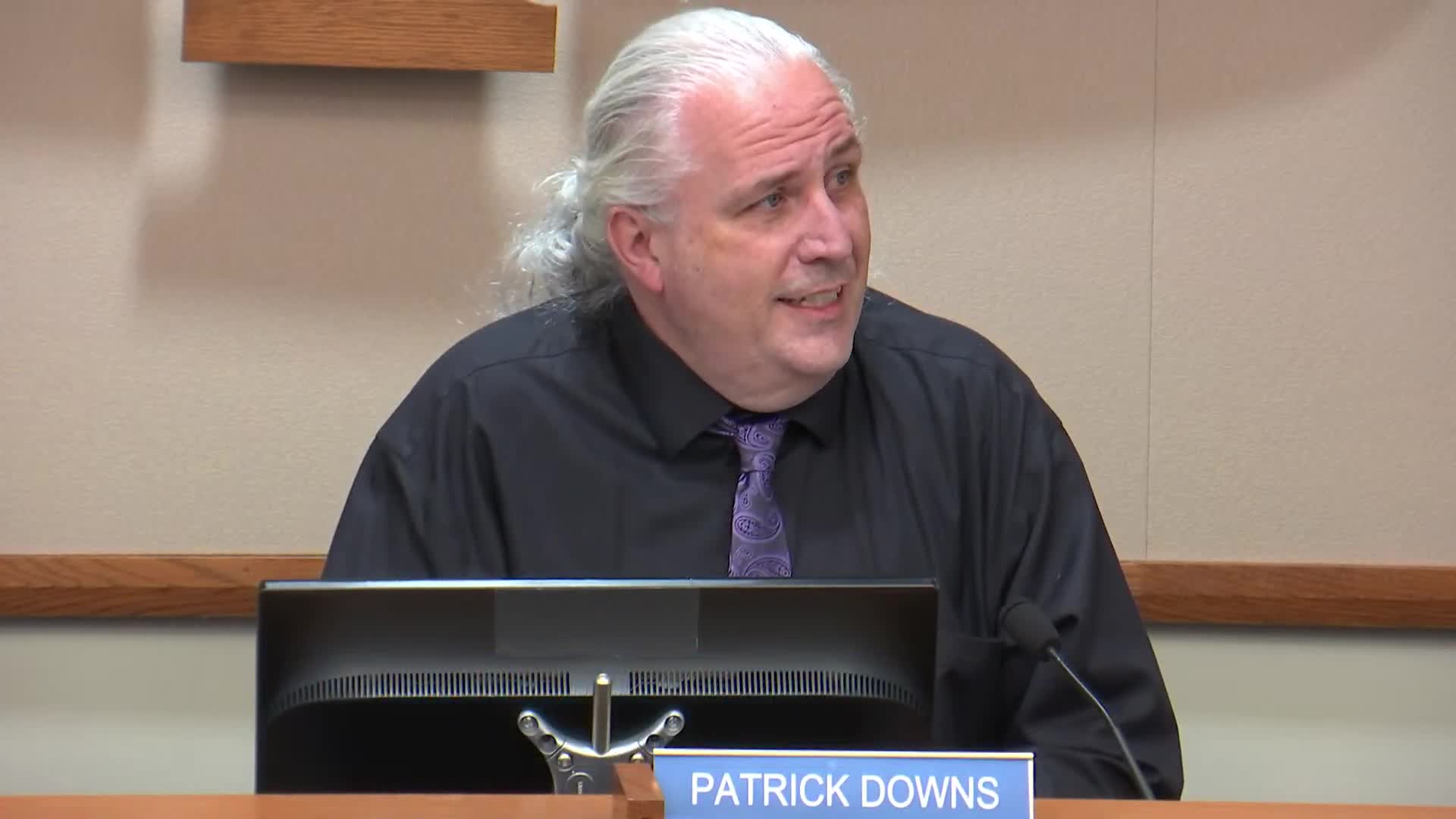
Summary
The commission recommended that the City Council approve a conditional use permit to convert part of 940 Hastings Avenue into a banquet/event hall while retaining behavioral health offices, subject to parking setbacks, landscaping, engineering corrections and noise limits (music off by midnight; venue closed by 1:00 AM).
The City of St. Paul Park Planning Commission on Nov. 10, 2025 recommended that the City Council approve a conditional use permit (CUP) for 940 Hastings Avenue to convert the warehouse portion of the building into a banquet/assembly space while retaining a behavioral-health office in roughly half the structure.
Planner Nate Sparks told the commission the application was a continuation from a prior meeting to review revised parking and landscaping plans. The property is in the B‑2 (highway commercial) zone and the proposal would introduce a commercial-recreation assembly use allowed only with a CUP. Sparks said the applicant supplied a revised parking layout, added landscaping islands and provided an audio test and engineering responses, but the parking revisions had extended a parking area into the rear setback and required further adjustments to meet the 5‑foot rear setback and minimum parking requirements.
Architect Anna Reinders said the banquet hall portion is being sized for about 440 people and the office portion for about 50 people. The applicants’ plan shows 123 parking spaces; Sparks and commissioners said that is at or near the municipal minimum and that losing a handful of stalls to a full 5‑foot setback could require either reconfiguration or a reduction of banquet area. The applicant said a civil engineer would calculate exact stall loss and the team offered to rework the plan as necessary.
Audio/video designer Todd Bernson described on‑site noise testing. He reported interior tests that brought the room to high volumes and measurements at three street locations that, during his daytime testing, registered near ambient traffic levels (roughly mid‑50s decibels). He cautioned the roof and loading dock doors can be transmission paths for low‑frequency 'bass' and recommended additional interior treatments (including an added layer of 5/8" gypsum) and use of a suspended speaker array to reduce structure‑borne transmission. Bernson offered to share his test report with the city and to perform further tests with neighbors on the phone during a controlled trial.
Several neighbors told the commission they had experienced significant low‑frequency vibration from a weekend gathering — including reports that bass was felt inside homes until about 1:45 AM — and urged stricter limits. Resident Steve Hartfield said he could "feel the thump, thump" inside his house and said midnight was a more appropriate music cutoff than the later times observed. Peggy Hartfield and another neighbor described rattling and urged testing at night or in quieter winter conditions to capture worst‑case impacts.
Commissioners discussed two enforcement approaches: a measurable, technical noise threshold (for example, detectable sound at neighboring residences above ambient) and a simple time‑based rule. Staff advised that time limits are easier for a small city to enforce; commissioners and the council liaison noted the police or sheriff can use meters but that off‑site detectability and ambient variability complicate enforcement.
The planning commission voted to recommend approval to the City Council with detailed conditions, including: demonstration that proposed facade and materials comply with code section 74‑238; revision of the parking plan to meet the required 5‑foot rear setback and the minimum number of spaces (section 74‑259) or a reduced banquet footprint to meet parking; required tree‑planting islands and shrub screening to mitigate headlight and parking‑lot impacts (section 74‑222); stormwater and engineer comments addressed; designated behind‑building smoking area; prohibition on using outdoor areas for social events; approved trash enclosure and signage plans; and explicit compliance with the submitted noise‑mitigation plan and documented policies to keep loading‑dock doors closed and mitigation measures in use when music is played.
As part of the recommendation the commission included time limits: music must end at 12:00 AM (midnight) and the venue must be cleared and closed by 1:00 AM. Chair Patrick Downeson moved the resolution and it was seconded; the motion passed with no recorded opposition.
The recommendation now goes to the City Council, which will receive the commission’s conditions and the applicant’s final revisions. Staff and the applicants said they will pursue additional testing and provide written engineering and audio reports to support the mitigation measures.