
District 196 reports higher ACT performance but racial gaps persist under new CACR measures
Get AI-powered insights, summaries, and transcripts
Subscribe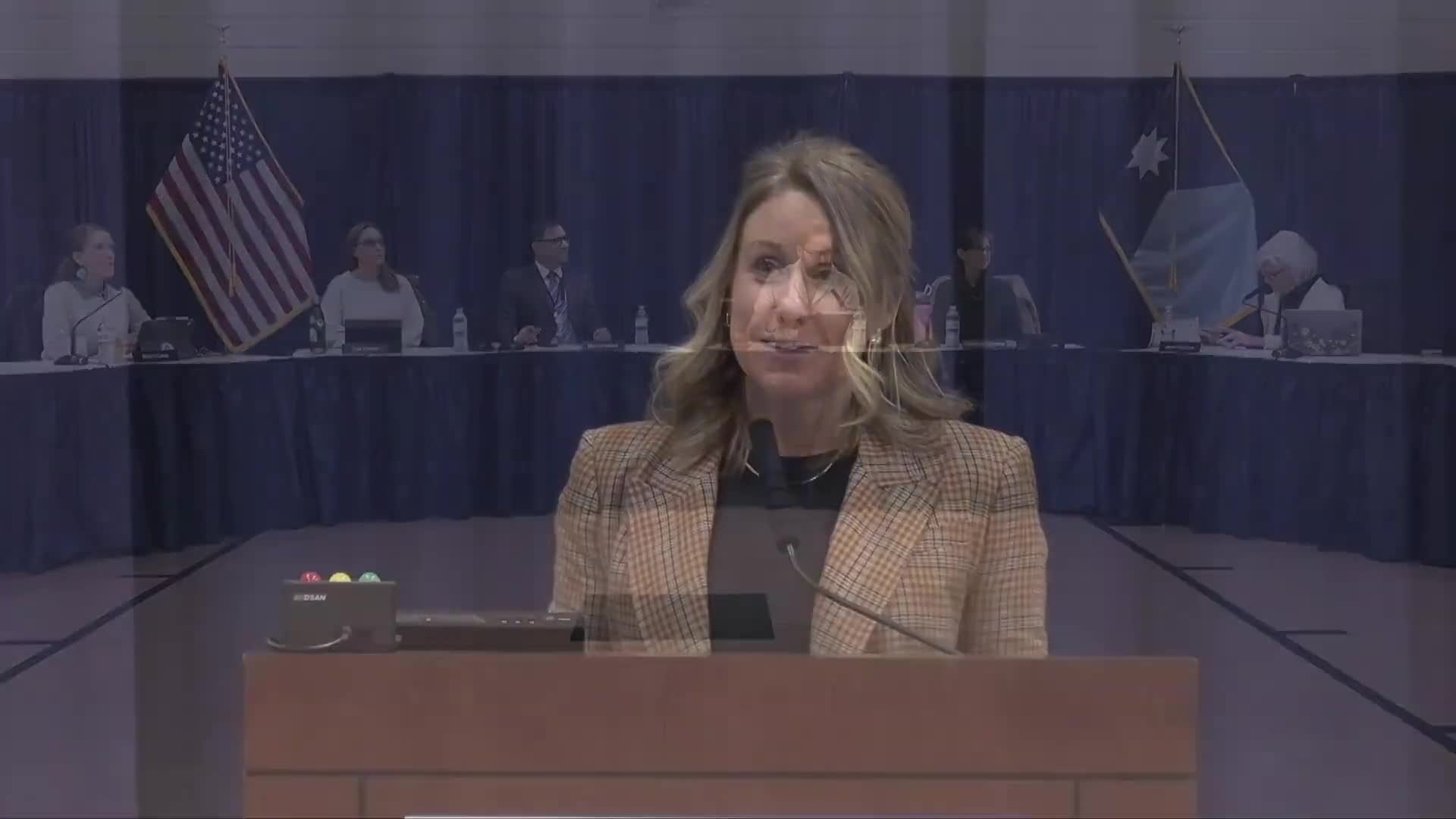
Summary
District 196 reported gains on several Comprehensive Achievement & Civic Readiness (CACR) measures, including ACT composite scores that rose to 59.3% meeting the college-readiness benchmark, but officials said proficiency gaps for underrepresented groups did not shrink and will remain a focus of targeted interventions.
The Rosemount-Apple Valley-Eagan School Board on Nov. 10 heard an annual update on Comprehensive Achievement & Civic Readiness (CACR) goals from Rachel Hughes, director of instruction and achievement, and Steven Belcamp, coordinator of research, assessment and analytics.
Hughes said the district tracks five CACR goal areas — kindergarten readiness, college- and career-readiness, graduation, lifelong-learning preparedness and closing the achievement gap — and that each area is measured by specific tools. She said the FastBridge screener is used for kindergarten literacy and the ACT (administered in school to juniors) is used to measure college-readiness.
Belcamp highlighted that the district surpassed its ACT growth target for the year: "the percentage of students that met the composite score of 21 or higher rose to 59.3 percent," he said, noting that the growth exceeded the district's three-point annual target. For kindergarten literacy, the fall FastBridge benchmark was met by 63.9% of kindergartners this year.
Despite those gains, staff acknowledged uneven progress on equity goals. Hughes said the district saw roughly three percentage points of growth in proficiency for most identified student groups from spring 2024 to spring 2025, "but we did not see a larger increase in proficiency in the underrepresented students, which is why those gaps didn't really change." She identified the targeted groups as Black/African American, Hispanic/Latino and American Indian students.
Board members pressed for further disaggregation. Board member Leah Gardner asked whether income-based measures might explain outcomes more than race; Hughes and Belcamp said the district already disaggregates by economic status and will provide the income-comparison data at a later meeting. Catherine Diamond and others asked about the new 'Prepared for Lifelong Learning' goal, which staff said will use baseline measures in Naviance this year and be developed with high-school counselors.
Hughes said data-driven interventions being used to support these goals include aligned evidence-based elementary literacy curriculum, expanded screening and progress monitoring, the BARR framework in high schools, and targeted ACT supports (preACT and elective ACT prep). She said staff will return with deeper examinations of the data and examples of how educators are using results to inform instruction.
The presentation was informational; no action was requested. The board scheduled a follow-up session to review detailed disaggregated data and intervention strategies.