Get Full Government Meeting Transcripts, Videos, & Alerts Forever!
Get email alerts on the Gaza Aid Access topic
No spam. Unsubscribe anytime.
UN: Gaza relief reaching many but bureaucratic hurdles and insecurity limit deliveries
Summary
The UN said partners have reached more than 1,000,000 people in Gaza since the ceasefire but cited red tape and insecurity that constrain operations; a UNICEF claim that Israel is blocking over a million syringes prompted UN calls to clear essential medical items and questions about aid‑truck daily tallies.
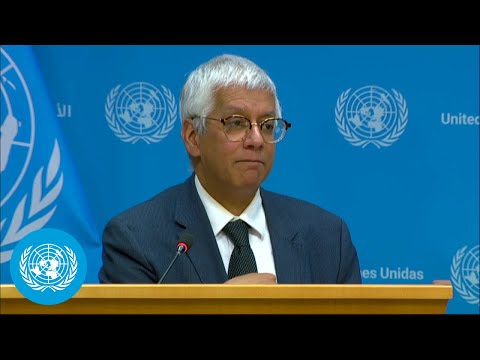
Farhan, the UN spokesperson, read a statement from Under‑Secretary‑General Tom Fletcher saying that one month after the ceasefire "we're continuing to seize every opportunity to save lives," describing progress on reopening nutrition sites, treating patients in hospitals and restoring water lines.
Farhan said the UN and partners have provided food to more than 1,000,000 people and that partners are distributing about 160,000 bread bundles each day produced by 19 UN‑supported bakeries, nine of them in northern Gaza. He added that UN Office for Project Services distributed more than 619,000 liters of diesel to partners since Nov. 7 to support water, sanitation, health, logistics and other operations.
When pressed about a UNICEF statement that Israel was blocking more than a million syringes needed to vaccinate children in Gaza, Farhan said the UN has encountered bureaucratic hurdles and some items have been cited as "dual use," delaying clearance. "So we're trying to get different items cleared, but there have been holdups," he said.
Asked whether any day in the past month saw more than 600 aid trucks enter Gaza, Farhan replied, "To my knowledge, no," and added that the UN monitors its own convoys (often around 150 per day) but cannot vouch for bilateral or commercial truck movements.
The spokesperson urged governments and mediators to ease constraints so humanitarian actors can reach more people.