
Residents flood council with objections as desalination 'Inner Harbor' proposal resurfaces
Get AI-powered insights, summaries, and transcripts
Subscribe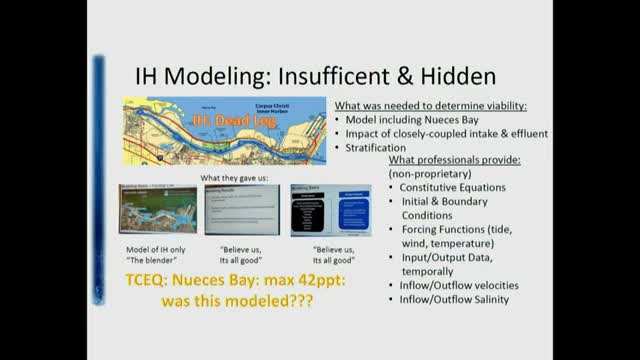
Summary
Dozens of residents and advocates urged the council to reject renewed consideration of a proposed Inner Harbor desalination project, citing environmental risks to Corpus Christi Bay, insufficient modeling, and concerns the plant’s water would primarily serve industrial users rather than residents.
An extended general‑public‑comment period focused largely on water policy, with many speakers urging the council not to advance a proposed Inner Harbor desalination project that would produce water mainly for industrial use. Speakers—residents, environmental advocates, former staff and regional representatives—raised environmental, legal and equity concerns and pressed the council to rely on reuse, conservation and other near‑term projects instead.
Opponents said the bay’s ecology, including microbial and plankton communities, would be harmed by large‑scale desalination intake and brine discharge and that modeling of the Inner Harbor option has been insufficient or not publicly available. "When we defend our waters and their delicate ecosystems, we are defending us," one speaker said. Several commenters called for full, transparent circulation and fate modeling of brine and thermal effects and asked that the city make any permit modeling available for independent review before considering further steps.
Advocates for desalination said the city must diversify its water portfolio and act quickly to secure long‑term supplies. Supporters argued that desalination may be expensive but that failing to secure supply carries even higher long‑term cost and risk. One commenter urged bold leadership, noting regional strategic and economic considerations.
Speakers also raised process and governance issues: allegations of industry influence on local decision‑making, requests for environmental justice reviews if state or federal permits are involved, and calls to place the question on a public ballot. Others praised recent alternative projects the council advanced and urged full evaluation of reuse, effluent conveyance and groundwater projects before large‑scale seawater desalination.
Council did not take a formal vote on desalination at this meeting; staff and council members acknowledged the intensity of public concern and reiterated that technical modeling and permitting complexity require further review before any formal action.