Get Full Government Meeting Transcripts, Videos, & Alerts Forever!
Get email alerts on the Personal Finance Course topic
No spam. Unsubscribe anytime.
Hatboro‑Horsham to add half‑credit personal finance course ahead of July 2026 state requirement
Summary
District staff outlined implementation of Pennsylvania’s Act 35 of 2023, saying a half‑credit personal finance course will appear in the high‑school Course Selection Guide on Nov.24 and is expected to be approved by the board in December for students to enroll in early 2026.
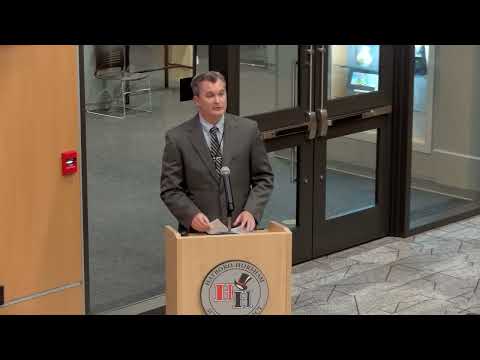
Dave Weber, a presenter from the district’s curriculum committee, told the Hatboro‑Horsham School District Board on Nov.10 that Pennsylvania’s Act 35 of 2023 requires all high schools to offer a half‑credit personal finance course beginning July 1, 2026. "We are getting close to the point where the rubber will hit the road on 07/01/2026," Weber said, explaining the district is preparing a course that will meet state standards.
Weber said the required course will cover behavioral economics, banking, investing, credit and debt management, paying for college, career skills, insurance, taxes, budgeting and consumer protection. He recommended NextGen Personal Finance as a free, widely used curricular resource and said the district plans to replace its existing 1‑credit financial literacy offering with a half‑credit personal finance course. The district identified the class of 2030 (current eighth graders) as the first cohort that will be required to complete the course as a graduation requirement.
On staffing, Weber said state code allows teachers certified in business, computer information technology, family and consumer sciences, high‑school math and high‑school social studies to teach the course; about 10 high‑school educators with those certifications have expressed interest in teaching the class. "Our first go to will be the teachers that we already have in the business department to staff these courses," he said, adding the state has offered flexibility on certification.
Next steps outlined by Weber include placing the new half‑credit personal finance course in the high‑school Course Selection Guide (CSG) that will be provided to the board on Nov.24 and seeking formal approval of the CSG at the December board meeting, which would allow students in grades 10–12 to enroll when course selection opens in early 2026. Weber said the district will return in the spring with a separate request to formally approve the core instructional resource for the course.
The presentation also noted longer‑term options: the state does not require the instruction to exist only as a standalone half‑credit course, so the district may consider embedding personal‑finance standards into other classes in future curriculum reviews. The board had brief clarifying questions and no formal action was taken at the Nov.10 work session; approval of the CSG in December would constitute the formal district adoption step.