
Grosse Ile board approves MDOT IJA grant for $448,788 taxiway joint-seal project with no local share
Get AI-powered insights, summaries, and transcripts
Subscribe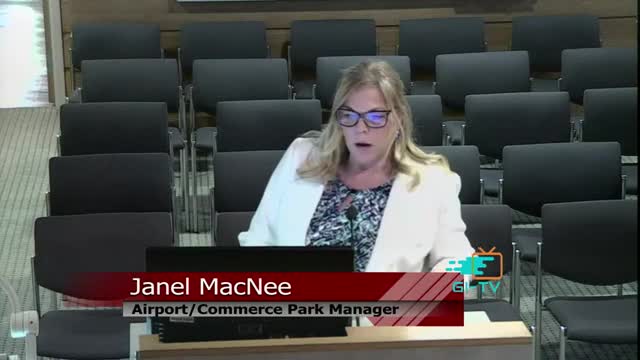
Summary
The board approved an MDOT Infrastructure Investments and Jobs Act agreement covering a $448,788 taxiway joint-seal project; airport manager Janelle said the federal/state grant covers 100% of the local share and emphasized routine maintenance and PCI-based prioritization.
The Grosse Ile Township Board on Nov. 10 approved a Michigan Department of Transportation Infrastructure Investments and Jobs Act (IJA) agreement to fund a taxiway Charlie/Echo/Foxtrot joint-seal project at the township airport, with an estimated project cost of $448,788.
Airport Manager Janelle told trustees the local share for the project is $0, thanking staff who pursued grant opportunities. “The local share for us is nothing,” she said, and described the project as part of a five-year pavement management program driven by FAA and state PCI (pavement condition index) guidance. She said routine maintenance this past year totaled about $83,000, and emphasized taking preventive steps to avoid expensive full rehabilitation.
Trustees asked how the airport competes for discretionary grants and whether the township can meet inspection, licensing and compliance requirements. Janelle said funding comes from multiple “buckets” (AIP, IJA/BIL and state-local programs) and that discretionary projects such as runway rehabilitation require a competitive application process. On the question of a previously referenced DTE grant, she said Metro Consulting Associates (MCA) would hold the contract, not DTE directly, and that the award is moving forward though paperwork was delayed.
The board approved the contract after the Airport Commerce Park Commission’s recommendation. The contract was identified in board materials as MDOT administrative number 2026-0036 and grant number 3-26-0025-217225.
Next steps: staff will execute the MDOT agreement and coordinate scheduling; Janelle said the project is expected to start in spring, subject to state and federal scheduling and satisfactory contracting.