Get Full Government Meeting Transcripts, Videos, & Alerts Forever!
Get email alerts on the Parks And Recreation topic
No spam. Unsubscribe anytime.
Plain City weighs new campground policy: winter closure, 30-day limit with 14-day break and resident priority
Summary
Council discussion centered on a proposed 2026 camping policy that would close the campground each winter (Nov. 1–March 31), limit consecutive stays to 30 days with a mandatory 14-day absence, and grant local residents a December priority reservation window before opening bookings Jan. 2.
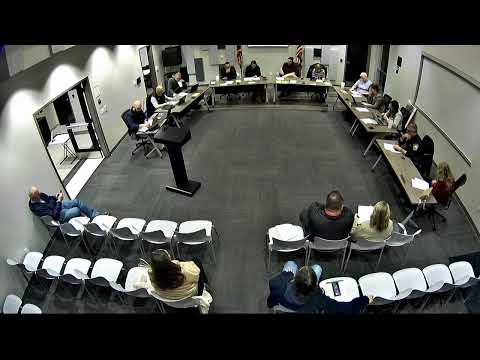
Plain City officials spent the bulk of their Nov. 5 special meeting debating a proposed 2026 camping policy that would close the municipal campground for winter and change how long visitors may occupy RV sites.
Parks staff presented the proposal and the recommended implementation timeline. Parks staff member Miss Granger said, “The proposed annual schedule will be closing date November 1 reopening date April 1,” and that the policy would become effective Jan. 1, 2026. The staff-recommended occupancy limit for campers is a maximum 30-day stay followed by a mandatory 14-day absence; staff explained the rule would be monitored manually in the reservation system.
Why it matters: staff and a visiting public commenter framed the change as a trade-off between maintenance and revenue. A visitor (speaker 4) told the council the campground generated substantially more revenue in the most recent year and said the village’s projection for fiscal 2026 would fall to about $150,000 from roughly $335,000 this year if winter reservations were eliminated. The visitor urged the council to consider alternatives such as stricter quality standards for RVs or a 180-day option rather than broadly shortening stays.
Council members probed several operational details. Staff said the campground has 56 RV sites and that the 30-day/14-day structure would mean some campers could occupy a site for roughly 120 days over a season if they returned repeatedly. Council members asked whether some sites (notably sites 6–10) should remain first-come/first-served to preserve walk-up or emergency availability; Miss Granger said keeping a small number of flexible sites provides operational benefits.
On resident access and rates, staff proposed a resident-priority registration period in December — with proof of residency required, likely in person — followed by an opening of reservations to the general public on Jan. 2. Multiple council members expressed support for keeping the resident rate unchanged and for giving residents a priority booking period. One council member asked whether holiday exceptions (July 4, Memorial Day) would be handled differently; members discussed holding a few sites for those events and leaving holiday exceptions to council discretion.
Enforcement and uncertainty: staff cautioned there is no exact way to predict revenue impacts until the policy is implemented and monitored. Because the reservation system cannot fully enforce certain manual checks, staff said some monitoring and manual verification will be required.
Next steps: council asked staff to prepare proposed rates and a formal policy amendment for a future meeting; Village Administrator Miss Lofton said staff would include the item on an upcoming council agenda for legislative action. No ordinance or formal vote on the camping policy was taken at the Nov. 5 meeting.
Quotes: • Parks staff Miss Granger: “The proposed annual schedule will be closing date November 1 reopening date April 1.” • Visitor (public comment): noted current-year revenue of about “335,000” and a staff projection of “150,000” for fiscal 2026 if winter reservations end.
What happens next: staff will return with proposed rates and a draft policy change for formal consideration at a future council meeting; council signaled general support for resident-priority booking and holding resident rates.