Ferndale council adopts FY26 cuts; 0‑waste systems manager post eliminated, services to be absorbed by other departments
Loading...
Summary
After extensive public comment and debate, the Ferndale City Council on Nov. 10 adopted a FY26 cost‑restructuring plan that eliminates the city’s 0‑waste systems manager position and reallocates its resident‑facing duties to the Department of Public Works and city management.
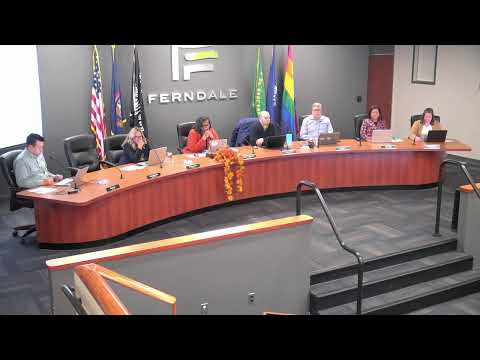
Ferndale — After more than an hour of public comment and council debate, the Ferndale City Council on Nov. 10 adopted a fiscal year 2026 cost‑restructuring plan that includes eliminating the city’s 0‑waste systems manager position and reallocating those duties to the Department of Public Works (DPW) and the city manager’s office.
City Manager Colleen told the council the state’s FY26 budget cuts to constitutional and statutory revenue sharing require roughly $222,000 in general‑fund reductions this year and larger recurring cuts in subsequent years. Her recommendation package included reducing a print newsletter, auditing software and telecom subscriptions, pursuing even‑year local elections and shifting the 0‑waste manager’s duties into DPW and other offices to achieve a cited net general‑fund savings of about $148,000.
Residents and commissioners urged a different path. Jim Janowicz, a 20‑year resident, said the city’s rain‑barrel and composting programs “diverted 2,000,000 gallons annually” and asked council “Do not eliminate the 0 waste manager position.” Andrea Popovich, chair of the Ferndale Environment and Sustainability Commission (FESC), said the position’s fully burdened cost is $85,000 — not the $148,000 figure in the city presentation — and argued the role secures grant funding and community outreach that exceed its salary cost.
Speakers repeated related claims: Logan Appleby, the city’s current 0‑waste systems manager, said the position brought in grants and an Eagle Climate Fellow and described work on residential energy efficiency and municipal carbon‑intensity reductions. Multiple residents said losing the dedicated staffer would reduce grant procurement and community engagement and could weaken Ferndale’s climate commitments.
Council members acknowledged the programmatic value but stressed the need to find cuts large enough to meet the immediate shortfall. One finance‑committee member said personnel reductions are the only available means to deliver the scale of savings required. City Manager Colleen said resident‑facing programs (composting, public recycling, native landscaping) would continue and be managed by DPW staff and the manager’s office; she also said the city is exploring outside partners and regional collaboration to support work that requires physical labor.
The resolution to adopt the cost‑restructuring plan passed by roll call. The minutes record Johnson (Yes), Kelly (Yes), Olica (reluctant Yes) and one recorded No vote on the transcript; the mayor announced the motion carried by majority.
What’s next: The manager said program continuity plans and budget amendments will be implemented within 30 days and refined during the city’s strategic‑planning process before the FY27 budget cycle. Council members and the manager said they will continue to pursue grant opportunities and regional partnerships to sustain sustainability programs.
Quotes: “Are we committed to our climate action plan or are we not?” asked Jim Janowicz during public comment; City Manager Colleen said the items recommended were selected to preserve core resident services while meeting fiduciary responsibilities.
Context: The city described the change as a product of the state budget’s reallocation of revenue sharing and increased restricted road funding under Act 51; council members urged residents to contact state legislators about the impact on local services.
Next step: Council directed staff to prepare the administrative realignments and budget amendments for the next Q2 reallocation and to present implementation details during the strategic‑planning session in February.