
Bowling Green staff propose 2026 utilities budget with rate increases and $10M short-term borrowing
Get AI-powered insights, summaries, and transcripts
Sign Up Free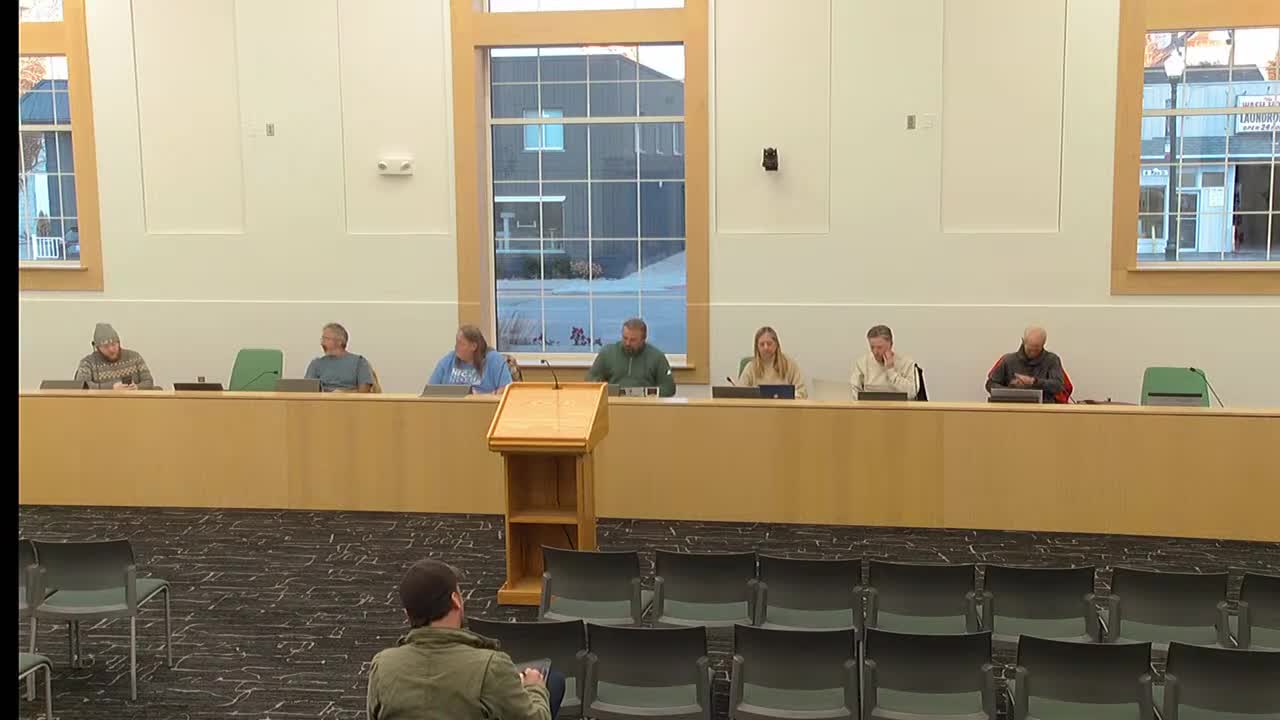
Summary
City utilities staff presented a 2026 draft budget proposing a 5% electric rate increase in July 2026, a 7% water increase in April 2026 and a 10% sewer increase in January 2026, while planning major plant upgrades and a $10 million short-term borrowing to fund capital projects.
BORROWING, RATE PROPOSALS AND PROJECTS: City utilities staff presented a draft 2026 utilities budget that would raise customer rates and use loan financing to cover several large capital projects.
Brian, a city utilities staff presenter, told the Board of Public Utilities at a work session that the draft budget includes a 5% electric rate increase effective July 2026, a 7% water rate adjustment in April 2026 and a 10% sewer rate adjustment in January 2026. "We did include a 5% rate increase for July 2026," he said. "We are recommending a 7% water rate adjustment in April, of '26." He also said, "We're looking to recommending a 10% rate adjustment in January '26." These proposals are recommendations; the board will review rate schedules after a cost-of-service study and could take formal action in late 2025 or early 2026.
Why it matters: Staff said revenue shortfalls and rising costs — especially wholesale power, capacity and transmission charges passed through by PJM and FirstEnergy — make rate adjustments necessary to meet bond covenants, fund operations and preserve reserves. Brian warned that the Water & Sewer Capital Improvement Fund (the "4017" fund) will receive a smaller share of local income tax over the next three years because of an ordinance change that reduces the distribution from 0.50% in 2025 to 0.45% in 2026, 0.40% in 2027 and 0.35% in 2028.
Planned projects and funding: The draft budget includes major capital work: a roughly $13.2 million program to add microfiltration and reverse osmosis trains at the water plant, a $13 million clarifier project at the wastewater plant, approximately $3.6 million to repaint and rehabilitate the Carter Park and Western water towers, $4.4 million for water distribution, and $10.8 million for wastewater collection projects. On the electric side, staff proposed $6.3 million in substation improvements (about $5 million at Bishop Substation to replace two transformers), $1.3 million at the Gypsy Lane Substation, upgrades in the Woodbridge Business Park ($3.5 million) and lighting and reliability projects in parks and downtown approaches.
To fund capital while preserving cash, staff said the city plans to transfer $3 million from the electric revenue fund to the electric capital reserve and to borrow about $10 million using a short-term bond anticipation note process offered through AMP. "We are looking to borrow $10,000,000 for electric capital projects," Brian said, describing BANs as short-term borrowing that is renewed annually and noting recent market rates for BANs.
Debt and reserves: Staff walked the board through debt-service schedules and cautioned that some bond payments extend into the 2040s and 2050. For the 4017 fund staff projected a beginning cash balance of about $5.9 million, projected revenues of $38.9 million (loans, income tax and a state grant reimbursement for a water treatment project), expenses of $40.9 million and an estimated year-end balance near $3.9 million. Brian said the city is preserving fund balances to meet future debt-service obligations and that, if income-tax growth slows, some debt might be shifted to ratepayer funds.
Operational details: Staff said they will complete a cost-of-service study for electric service toward the end of the year and present a proposed schedule to the Board of Utilities in early 2026. They also noted investments in behind-the-meter generation (battery and a diesel generator at the wastewater plant, plus hydro and solar credits) are expected to reduce net power costs by an estimated $4.3 million in 2026.
Sewer and equipment notes: For the sewer fund, staff recommended a 10% rate increase and a $678,000 transfer to sewer capital; the sewer fund is described as the most fiscally constrained of the three utilities and will be prioritized for a cost-of-service study. Staff also said a $645,000 Vactor truck was placed entirely in the water budget this year because the sewer fund is too tight; water will seek reimbursement from sewer over future budgets, estimated at roughly $65,000 per year over five years.
Next steps: Brian said the board is expected to be asked to approve the budget at a November board meeting; after board approval the budget will go to city council. Rate adjustments will be brought back for formal consideration after the cost-of-service work is complete, likely in late November or early December for some items and in early 2026 for final action.
What was not decided: None of the proposed rate changes or borrowings were adopted at the session; they were presented as staff recommendations. No motions or votes were recorded in the work session minutes.
Sources: Presentation and discussion at the Bowling Green Board of Public Utilities work session (staff presenter Brian).