
Newberry commissioners approve interim zoning changes on first reading, strip lot‑count language
Get AI-powered insights, summaries, and transcripts
Subscribe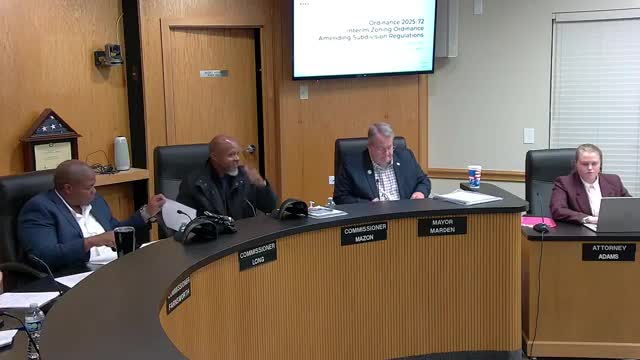
Summary
The City of Newberry approved the first reading of an interim zoning ordinance that relaxes certain subdivision rules — removing proposed lot‑count provisions after commissioners voted 3–2 to exclude them, while leaving other temporary changes in place for up to 12 months.
The City of Newberry commission approved on first reading an interim zoning ordinance intended to ease subdivision rules while the city completes a full land‑development rewrite.
Community development director Jean Paul Perez told the commission the ordinance is a temporary, 12‑month measure “to test [regulations] out” and to address urgent needs created by recent state law changes. Perez said the ordinance removes a second‑side sidewalk requirement and some site‑lighting rules, allows bonding in lieu of completed infrastructure for final plats and deletes a one‑mile‑from‑water restriction that previously limited where subdivisions could occur.
“Major subdivisions may be deemed minor subdivisions, like the one we just saw, where it’s less than 10 lots,” Perez said, describing how the changes would affect rural splitting of family parcels.
City Attorney warned commissioners about state preemption. “This bill is currently in litigation in the third circuit,” she said, noting that municipalities statewide have sued over Senate Bill 1 80 and that the statute can limit what local governments may lawfully make stricter than state standards.
After extended debate over whether the ordinance would encourage unpaved private roads and fragment rural land, the commission amended the motion to remove proposed lot‑count provisions from the interim ordinance. The amended motion — excluding the language governing the number and size of lots — passed on a voice vote that commissioners later characterized as a 3–2 result.
Commissioners and staff agreed the remaining ordinance language would remain in effect for up to 12 months, can be extended or terminated by the commission, and would be revisited on the second reading scheduled for Nov. 24. Perez urged commissioners to scrutinize preliminary plats and construction plans when they appear before the commission, because those are the moments when substantive design and infrastructure obligations are set.
The vote left unresolved how the city will address long‑term parcel‑split rules and the commission signaled it may treat lot splits as a separate policy question or bring them back when a full dais is present. The interim ordinance as amended does not commit the city to permanent code changes; it automatically expires in one year unless extended.
Next steps: the ordinance returns for second reading and additional discussion; commissioners said they want more time to consider lot‑split policy and potential impacts on private road maintenance and rural character.