Cambridge finance team warns of multi-year downturn; administration sets FY27 targets and seeks $12M in savings
Loading...
Summary
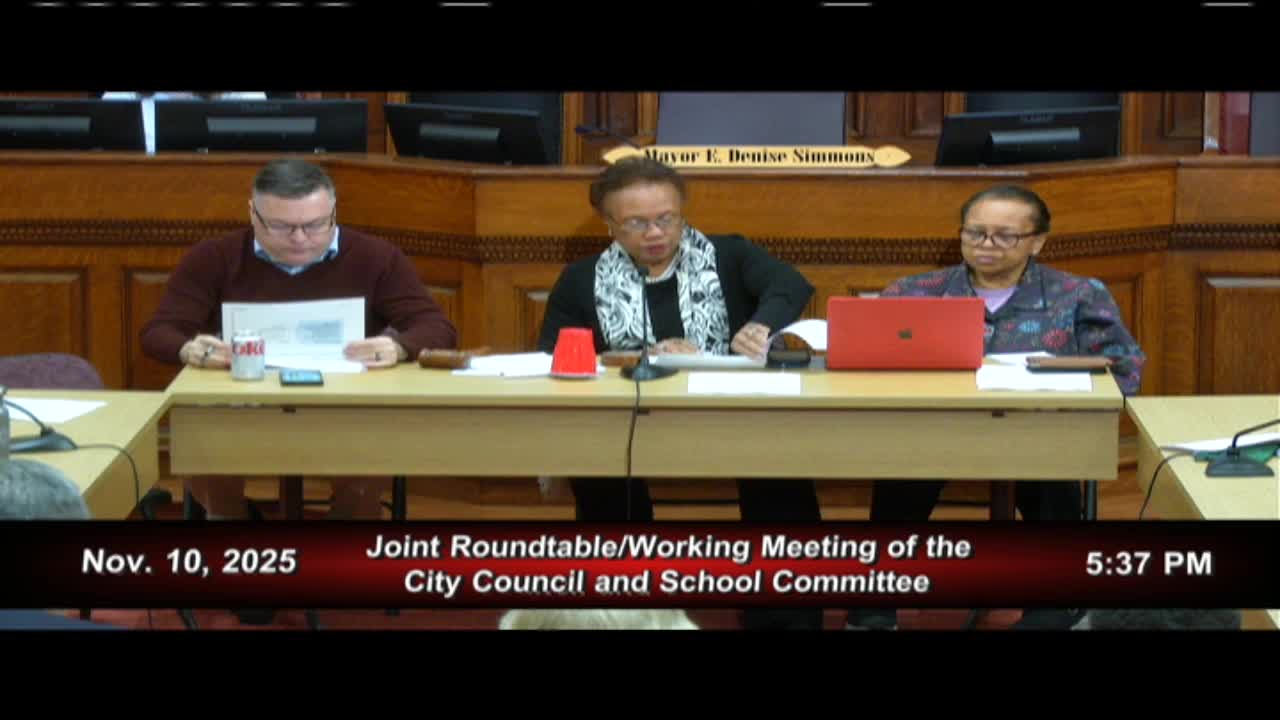
City finance officials told the Cambridge City Council and school committee on Nov. 10 that a slowing local economy and falling commercial property values have reduced the city's fiscal flexibility and will require constrained budget growth in the coming year.
City finance officials told the Cambridge City Council and school committee on Nov. 10 that a slowing local economy and falling commercial property values have reduced the city's fiscal flexibility and will require constrained budget growth in the coming year.
Assistant City Manager for Fiscal Affairs Claire Spinner said commercial real property values used to set FY26 values fell about 12.5% ("from $33.6 billion to $29.4 billion") and that new growth added to the tax base dropped by more than 40% (from $24.2 million to $13.8 million). "These negative trends really have serious implications for the city's financial health," Spinner said.
Why it matters: the city uses excess property-tax levy capacity to smooth year-to-year funding and to support investments such as affordable housing, universal pre-K and school hours. Spinner said the city's excess levy capacity has declined as a share of the operating budget (from roughly 30% in 2018 to about 17% in FY26), and that continued weak growth would further erode that cushion.
To limit taxpayer impacts and preserve flexibility, the administration proposed preliminary FY27 targets: hold the tax levy increase to less than 7% and keep total operating budget growth under 5%. Spinner said meeting those targets would require finding approximately $12 million in savings for FY27, a target met partly by asking each department to identify about 2.1% in savings and by pursuing citywide reductions such as cutting out-of-state travel.
Budget and schools: Spinner reported the FY26 combined city/school operating budget is nearly $1.0 billion, with about $280 million allocated for Cambridge Public Schools. Superintendent David Murphy said the school department will align its strategic planning with the city's fiscal targets and prioritize teaching and learning in any realignment of resources.
Tax-shift scenarios: the administration presented models showing that, if commercial values continue to fall while residential values hold or rise, the tax burden could shift toward residential taxpayers beginning in FY28. Spinner outlined a base-case scenario where a 7% levy increase yields a 10.7% increase for residential taxpayers and a more pessimistic scenario in which residential tax bills rise by as much as 17%.
Federal grants and a short-term backstop: the city has set aside a $5 million federal stabilization fund to respond to possible federal grant reductions; to date the administration has allocated $1.25 million of that fund (including $1.0 million for housing assistance for mixed-status families and $250,000 to mitigate SNAP-related food insecurity). Chief Financial Officer Ivy Washington said school-related federal grants are under 5% of the school budget and that the district has carryover cushions to limit immediate impacts.
Capital planning and debt service: officials said they will shift to resource-constrained capital planning, letting available debt-service capacity drive project prioritization. "We aim to limit our tax-supported net debt service growth to less than 5% in the FY27 budget," Spinner said, and Deputy City Manager Watkins said the administration will re-scope and re-sequence projects where necessary.
Council and committee concerns: elected officials pressed staff on how cuts would be evaluated, how savings targets would be apportioned across departments, and what the city will do to protect the most vulnerable residents and students. Staff said departments will lead evaluation of program-level changes and that the city will seek creative, cost-effective approaches to meet policy goals while preserving services where possible.
Next steps: the administration said it will continue meetings with department leaders and school finance staff through December to finalize budget baselines and to present detailed proposals in the months ahead. Formal council budget hearings and votes on the FY27 operating and capital budgets are expected in spring and early summer under the city's calendar; the administration also signaled it will run additional roundtables to continue the conversation.