Washtenaw officials warned HUD funding shift could jeopardize thousands of housing supports
Loading...
Summary
County staff told commissioners that a sudden federal shift and a new HUD competition could put Washtenaw CountyCoC grants (about $7.3 million annually) at risk, and urged emergency local planning and advocacy to protect permanent supportive housing.
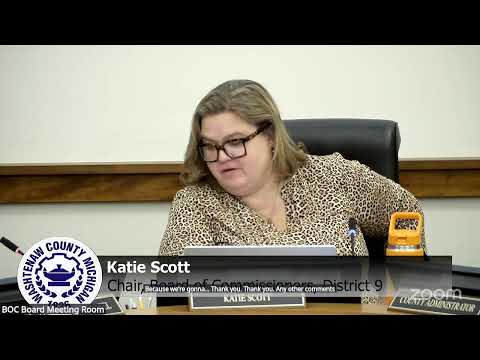
Kristin Kunis, continuum-of-care supervisor for the office of community and economic development, told the Washtenaw County Board of Commissioners on Tuesday that a new U.S. Department of Housing and Urban Development (HUD) competition could end protections that had previously stabilized local housing grants.
"Loss or substantial shifts to this funding would severely disrupt our local operations and place hundreds of vulnerable residents at immediate risk of losing housing stability," Kunis said, describing roughly $7,300,000 in annual HUD funding that supports emergency shelters, rapid rehousing and permanent supportive housing in the county.
Kunis said the Biden administration had previously shifted CoC awards toward two-year grant terms, a change intended to provide stability, but HUD announced a new Notice of Funding Opportunity (NOFO) competition in July. The NOFO has not been released because of the federal government shutdown; historically, HUD awards can take six months or more from NOFO release to grant awards, which could mean awards are not announced until mid-2026. Some local grants are scheduled to expire as early as April 1, 2026.
Staffers provided a preliminary estimate that protecting the county's permanent supportive housing projects would require about $2.34 million annually if federal funding were cut or reallocated away from long-term supports. County officials said that figure covers supportive-services staffing and rental assistance that helps tenants remain housed.
Racial equity and public-health leaders at the table stressed the uneven impact of cuts. Derek Jackson, the countyracial-equity officer, and Trish Cortez, director of community mental health, said the county's data show homelessness disproportionately affects Black residents and single-parent households led by women.
"When you break those numbers down, we are talking about a Black-mother issue around homelessness in Washtenaw County," Jackson said.
Commissioners pressed staff for options. Kunis outlined short-term tactics already underway: maximizing existing federal dollars, exploring conversions of projects to models HUD might continue to fund, identifying alternative revenue streams and authorizing contingency measures to preserve rental assistance and case management.
Commissioner Somerville urged the board to use its existing lobbying contract to press Lansing and state partners for more permanent supportive-housing funding if federal allocations are cut. Several commissioners supported contingency funding and local solutions but asked staff for precise dollar scenarios and timelines before making binding commitments.
No formal county appropriation was recorded at the meeting; instead, the presentation led to requests for follow-up: staff were asked to return with tighter cost estimates, options for reallocating pass-through funds, and recommended advocacy actions at the state and federal levels.
What happens next: county staff said they will continue contingency planning and advocacy and return with more precise estimates and proposed actions before the board's next regular meeting.