Lifetime Citizen Portal Access — AI Briefings, Alerts & Unlimited Follows
Michigan National Guard tells House committee it is stretched but ready; highlights Northern Strike and training assets
Loading...
Summary
Adjutant General Paul Rogers told the Michigan House Committee on Homeland Security the Guard fields roughly 10,000 members across 41 communities, runs large multinational exercises such as Northern Strike and relies on state partnerships to sustain readiness and community missions.
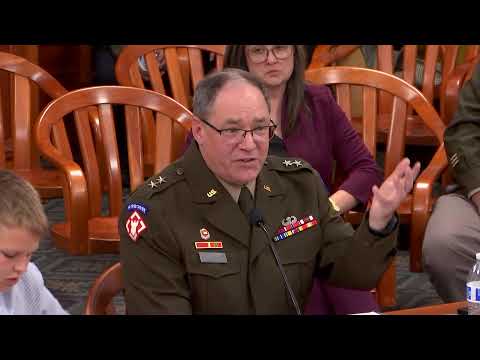
Adjutant General Paul Rogers told the Michigan House Committee on Homeland Security and Foreign Influence that the Michigan National Guard remains heavily engaged at home and abroad and that the state's training assets are a strategic advantage.
Rogers, who leads the Michigan Department of Military and Veterans Affairs, said the Guard's uniformed force is "just under 10,000 members," with about 2,500 in the Air National Guard and the remainder in the Army Guard. "We have close to 1,100 members of Michigan National Guard not serving in Michigan but serving elsewhere. Seven hundred of those are overseas," he said, adding deployments span roughly 17 countries.
The Guard operates major facilities that Rogers described as both readiness centers and economic anchors. He highlighted Selfridge Air National Guard Base, which he said is operated by the Michigan National Guard as a primary tenant on Air Force-owned property and supports roughly 5,000 people on a typical day. He also named Alpena as a combat readiness training center and Camp Grayling as the Guard's largest maneuver site with 148,000 acres of training terrain plus about 52,000 acres of permitted access for low-impact training.
Rogers emphasized large-scale exercises, citing Northern Strike as a marquee event that last year included about 7,800 participants from 35 states and 10 nations. "Our training environment here in Michigan is unmatched anywhere in the country," he said, describing Michigan's ability to host combined land, air, maritime and electromagnetic-spectrum training concurrently.
Rogers framed the Guard's role as twofold: preparing personnel for federal warfighting duties and providing state-level support for emergencies. He reminded members that when ordered by the governor the Guard operates under state authority for emergencies such as storms or local unrest, while federal activations place units under presidential authority.
Committee members praised the Guard's efforts and asked follow-up questions on specific capabilities, including cyber support and equipment parity with active-duty forces. Rogers acknowledged equipment and training priorities and said the Guard pursues partnerships with industry and state agencies to maintain readiness.
The committee concluded routine business after the briefing; Representative Menser moved to approve the minutes of Oct. 29 and the chair said, "hearing no objection, they are approved." The meeting then adjourned.
Rogers' briefing will inform further committee discussions about budget priorities, training support and legislative measures tied to readiness and community impacts.