Get email alerts on the Standard Response Protocol topic
No spam. Unsubscribe anytime.
Wake County Schools to adopt plain-language Standard Response Protocol and standardized reunification process
Summary
District security staff outlined plans to replace color-coded emergency signals with plain-language SRP terms (including a new 'hold' status), standardize a six-step reunification process with verification cards, and run training modules and demos; members questioned scalability and technology fallbacks.
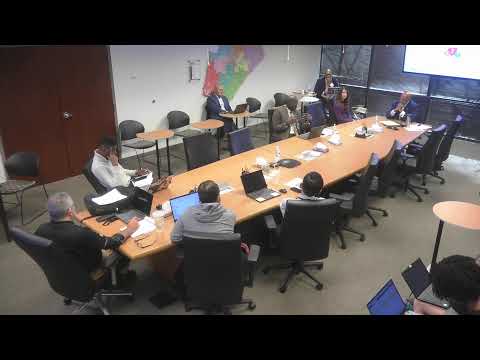
Wake County Schools staff told the Safety & Security Committee on Nov. 5 they are moving away from color-coded emergency signals in favor of a plain-language Standard Response Protocol (SRP) and a standardized reunification process developed in partnership with the I Love You Guys Foundation.
"We're looking to move away from the old code red, code yellow, code green ... to a more plain-language, plain-speak best practice," Mr. Scott, the district's senior director of security, said. He explained that while the names change, the classroom actions tied to those signals will remain the same.
Mr. Scott described the SRP terms and a new in-between status called "hold" for incidents that require teachers to clear hallways without a full lockdown (for example, a medical emergency in a hallway). "If you have an incident where there was a medical emergency in the hallway ... the hold option is just that ... Teaching and learning will continue to happen," he said.
On reunification, staff outlined a six-step procedure including a greeting station, a two-part verification card (one half retained by the school, one carried to the student), designated reunification areas, a runner to fetch students, and an accountability check to confirm identity before release. Mr. Scott said the district tested a full demonstration at Oberlin Middle School with SROs and supervisors to refine the steps.
The rollout will include four targeted training modules for administrators, staff, students and parents, plus demonstrations and procurement of printed materials. Mr. Scott said the district has a tentative calendar and expects to complete implementation "by September 26" (the transcript did not specify a year). He also said vendor Verkada is exploring electronic visitor-management integration with the I Love You Guys tools but recommended maintaining paper cards as a fallback in case of network or cell outages.
Committee members raised operational concerns about scaling the runner/card reunification approach at large high schools and suggested drills to identify adaptations. Mr. Nershkin warned that fetching thousands of students singly could take hours; staff replied that drills and beta tests will inform school-specific adjustments. Members also discussed the role of law enforcement in traffic control during mass checkouts and the importance of communications to discourage parents from converging on campuses and blocking emergency access.
Next steps: staff will continue module development, conduct demonstrations with divisional principals and SROs, and prepare printed and electronic materials. At the meeting's close the committee voted to move into closed session for statutory matters.
AI generated
The text on this page is AI generated. Summaries, highlights, analysis, and video transcripts are all produced from the original source material.
AI can make mistakes, so if you spot one, and we will fix it for everyone.
Note: the source content is unaltered by us. Any content source we link to, be it a video, an audio recording, or a document, is presented exactly as its publisher released it. That publisher is usually a government body, sometimes an individual official or another organisation.