Supreme Court of Texas Hears Case on Whether 5K 'Turkey Trot' Is 'Recreation' Under State Law
Loading...
Summary
The Supreme Court of Texas heard arguments over whether participating in a 5K "turkey trot" that ran through a city park and along the San Antonio River qualifies as "recreation" under Texas's recreational‑use statute, a determination that affects whether the City is immune from ordinary negligence claims.
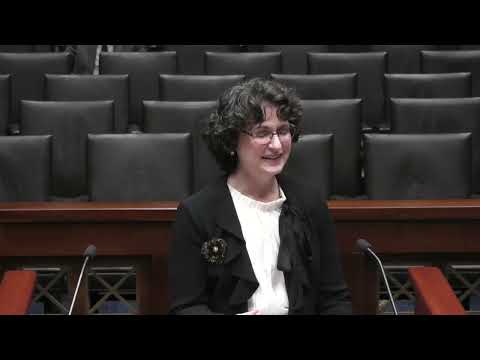
The Supreme Court of Texas heard oral arguments in City of San Antonio v. Rialme on whether running in a 5K charity event that traversed city parkland and the San Antonio River qualifies as "recreation" under the state recreational‑use statute, a designation that can limit a government unit's liability. Petitioner counsel Jackie Strow told the court, "The answer to that question is yes," arguing the event's outdoor setting and route through parkland bring it within the statute's catch‑all language.
Why it matters: The court's interpretation of the catch‑all provision in the recreational‑use statute could determine whether municipal property owners must meet a higher proof threshold (gross negligence) to be liable for injuries occurring during events like organized runs, or whether ordinary pedestrian standards apply to people using sidewalks and streets.
Strow, representing the City of San Antonio, urged the justices to read the statute broadly. She emphasized the text's non‑exclusive list of activities and proposed a factor‑based, objective test that weighs whether an activity is outdoors, involves natural features, and whether enjoyment of nature is incidental or integral to the activity. Strow also suggested distinguishing amateur participation from professional activity, saying professionalized activity makes a finding of "recreation" less likely.
During questioning, several justices pressed hypotheticals to probe the outer limits of the catch‑all: would commuting through a park, strolling to work, or "pleasure driving" along park roads count as recreation? Strow responded that routine commuting or incidental outdoor exposure should not convert ordinary transportation into recreation and that courts must look to objective facts rather than a participant's subjective intent.
Respondent counsel argued for a narrower construction of the statute, urging the court to avoid depriving individuals of common‑law rights absent a clear legislative mandate. That counsel stressed the statute's purpose — to encourage landowners to open land for public use — and warned that treating commonplace pedestrian activity as "recreation" could immunize governments for ordinary hazards on sidewalks and streets. Counsel also noted the statutory history and prior cases, arguing the catch‑all should not displace ordinary pedestrian protections without explicit legislative direction.
Both sides and the court discussed precedent (including Williams, Torres, Satterfield, and City of Dallas v. Martin) and legislative amendments that added and revised enumerated activities. Justices raised additional tests — whether the activity is done for its own sake versus for an instrumental purpose, whether the event is normally held outdoors, and whether participants had a realistic choice about location — as possible guideposts.
In rebuttal Strow asked the court to adopt a narrow holding if it preferred, reiterating that a 5K run on a route that runs through parkland and beside the San Antonio River "is engaging in activity associated with enjoying nature or the outdoors." The case was submitted for decision.
What remained unresolved: The transcript reflects substantial judicial concern about line‑drawing: the justices repeatedly posed hypotheticals (commuting, professional athletes, indoor relocation for weather) highlighting how different factor weightings would change outcomes. The court did not issue a ruling at argument's end; the matter was submitted for decision.
Courtroom details and parties: The argument was listed as case number 240864, styled City of San Antonio v. Realme. Petitioner counsel Jackie Strow announced herself to the court; the transcript identifies the respondent by name (Nadine Rialme) but does not consistently provide a single clear, spelled counsel name for the respondent in the record provided.
Next step: The Supreme Court of Texas will issue an opinion clarifying whether events like organized 5K races fall within the recreational‑use statute's catch‑all and what legal standard applies to governmental units in such contexts.