Get Full Government Meeting Transcripts, Videos, & Alerts Forever!
Get email alerts on the Environmental Health topic
No spam. Unsubscribe anytime.
Students present local tests alleging higher soil and water acidity in Huntington Park; calls for testing and remediation
Summary
Students from Aspire Pacific Academy presented classroom research to the council, reporting that soil and water samples from parts of Huntington Park showed higher acidity in their classroom titration tests and suggesting regular testing, community engagement and urban greening as mitigation.
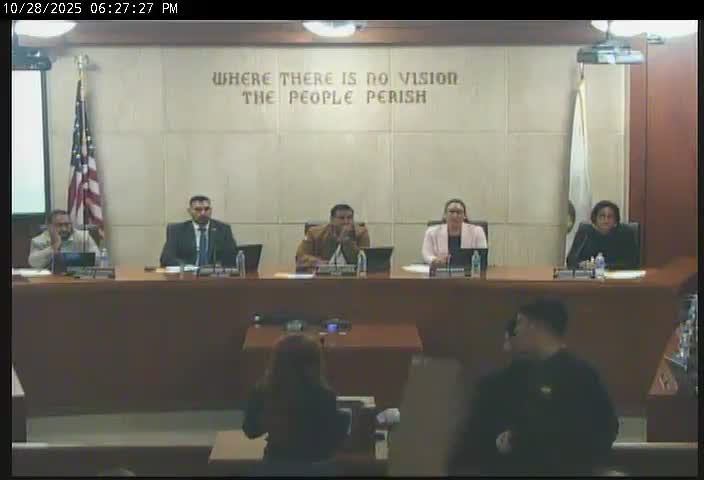
HUNTINGTON PARK, Calif. — Multiple student groups from Aspire Pacific Academy presented results of classroom research at the Huntington Park City Council meeting on Oct. 28, saying their titration experiments found higher acidity in local soil and water samples and urging the city to support testing and remediation.
Students described collecting samples from homes, school sites and neighborhood locations and using titration to measure pH. One group stated the “environment of Huntington Park is not safe,” and presenters proposed draft legislation that would require more monitoring, public reporting and community‑led prioritization of cleanup work. The classes proposed short‑term measures such as planting trees and longer‑term programs including public dashboards and stakeholder engagement.
Gilberto Quintero, the science teacher who organized the classroom projects, told the council he and his students had been gathering samples and that some student measurements exceeded the levels the students said they compared with CDC‑referenced thresholds. The students themselves characterized their findings as classroom research and urged the council to commission professional testing and to work with experts to validate results before taking regulatory steps.
Councilmembers thanked students for their presentations and encouraged community participation in environmental monitoring. The presentations were largely educational: students explained experimental methods, hypothesized links between redlining and environmental conditions, and suggested civic actions for testing and remediation rather than city‑level regulatory changes based solely on classroom work.
The science teacher asked the council to consider student findings “and take these issues to heart,” noting student projects can identify local concerns that merit expert follow‑up.