Get Full Government Meeting Transcripts, Videos, & Alerts Forever!
Get email alerts on the Ems Tax topic
No spam. Unsubscribe anytime.
Daviess County officials consider short-term EMS tax to offset SB 1 revenue loss
Summary
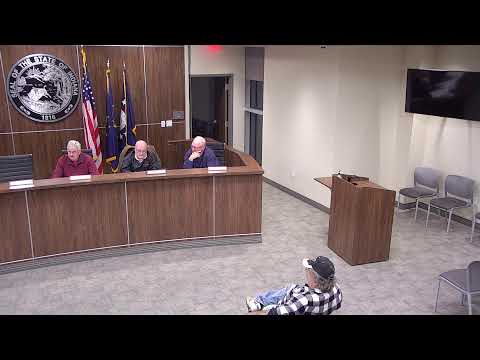
Daviess County commissioners and staff held a public hearing on a proposed local emergency medical services (EMS) tax, discussing estimates of household cost, limits on how the revenue may be used and whether the county should instead draw from redevelopment (TIF) funds to postpone a tax decision.
Daviess County commissioners and staff held a public hearing on a proposed local emergency medical services (EMS) tax, discussing estimates of its household cost, limits on how the revenue may be used and whether the county should instead draw from redevelopment (TIF) funds to postpone a tax decision.
At the hearing the presiding officer said county financial advisers estimate the measure’s impact using a county median income of about $68,000 and that “the proposed EMS tax would ... be an impact of right around $62 a year” for that income level, adding the money would be restricted to emergency medical services. County staff clarified the state limits mean the levy would primarily support ambulance service, not a broader public safety tax covering police or volunteer fire departments.
Residents raised concerns about who benefits and who pays. Paul Traylor, a resident, recalled when a private provider ran the ambulance service and said the county subsidized it then; he asked whether hospital management or ownership (Deaconess) could cover costs. A county official answered that Deaconess manages but does not own the hospital and that earlier private operators were subsidized by taxpayer dollars. Resident Steven Walden urged the board to consider a broader public safety tax that would help volunteer fire departments and questioned persistent ambulance wait times in some parts of the county.
Commissioner Cook suggested an alternative: use roughly $1 million from the county’s redevelopment (RDC/TIF) fund to delay implementing the EMS tax until the state’s short legislative session (January–March) clarifies how SB 1 will change local revenue flows. “Take that million, delay this so we see what SB 1 really is going to look like after the short session,” Cook said. Auditor Debbie Goodwin described mechanics in SB 1 she said would shift some revenue away from property tax toward other mechanisms and noted changes in business personal property thresholds; she said some deductions for veterans and older residents remain intact.
Numbers discussed at the hearing varied by source: county staff cited a financial-analyst estimate of about $62 per year for a household at the $68,000 median, while another presentation compared current per-person ambulance funding of $22 and described an incremental increase of $14 (to $36) as one possible rate. Officials stressed those are estimates and that state rules constrain how the EMS tax revenue may be spent.
Procedural steps: after public comment, the board voted to close the public portion of the hearing and opened a special meeting to discuss options. A motion to table the decision and hold a special meeting Friday at 8:30 a.m. to take the formal vote passed; the board said that vote would occur without additional public comment. The commissioners asked staff to gather the requested financial figures and to coordinate with the RDC and other bodies before Friday’s meeting.
The board’s next steps are to reconvene at the scheduled special meeting to vote on whether to place the EMS tax on the local income tax schedule or to authorize a temporary TIF transfer, based on updated financial detail and developments in the state short session.