Get Full Government Meeting Transcripts, Videos, & Alerts Forever!
Get email alerts on the Lewis And Clark Fishing topic
No spam. Unsubscribe anytime.
Fort Missoula educator traces Lewis and Clark’s fishing practices and the region’s changing rivers
Summary
An education assistant from the Fort Missoula Historic Museum reviewed fishing techniques, species and Indigenous practices encountered by the Lewis and Clark expedition, described how river ecology has since changed, and answered audience questions at a Missoula Public Library program.
An education assistant at the Fort Missoula Historic Museum gave a public program at the Missoula Public Library about fishing on the Lewis and Clark expedition, outlining historical tackle, Indigenous fishing methods and how dams and land use have reshaped regional fisheries.
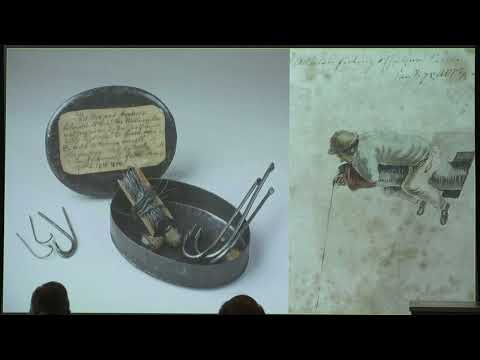
The presenter described how by 1800 fishing tackle was beginning to resemble modern gear — jointed rods with brass fittings, early bamboo rods and the first simple reels — but noted Lewis and Clark mainly carried coarse, bait-oriented gear. “Fishing is more than just food,” the presenter said, adding that angling also provided enjoyment and a way of life that persists today.
Drawing on expedition journals and museum artifacts, the speaker highlighted Silas Goodrich as the party’s “principal fisherman,” and said Goodrich’s catches at the Great Falls resembled what we now call cutthroat trout. The presenter noted the expedition’s early catches on the Ohio and Missouri rivers and described mass-harvest methods such as brush drags and seine nets, which the party used at several locations.
The program placed those small-scale practices alongside Indigenous methods. The presenter described Hidatsa and other Earthlodge peoples’ fish baskets and weirs and the seasonal, community-centered dip-net platforms at Celilo (Salilo) on the Columbia River, which historically concentrated salmon runs and could feed a family for a year.
The talk also stressed ecological change. The presenter said river divides and warming from land use, runoff and dams have shifted fisheries: areas that once produced cutthroat-like trout below the Great Falls are now warm-water fisheries dominated by catfish and sauger. He noted that some salmon restoration and fish-passage projects show promise — “there have been fish documented using a fish passage built near Glendive,” he said — but cautioned recovery is slow and dependent on long-term conditions.
Audience members asked about camas (a native edible plant), the size and identity of salmon and the role of dams and fish ladders. On camas, the presenter explained the bulb’s preparation and seasonal meadows at Lolo Pass. On dams and barriers, he said waterfalls and later dam construction limited salmon access to some drainages, and that not all historic barriers are suitable locations for fish ladders.
The program included lighter moments and local connections: the presenter noted that, according to a historical count, expedition members ate dogs in extremis (“193 dogs were eaten on the Lewis and Clark expedition”), and traced Goodrich’s post-expedition life to a farm near an existing hatchery. Attendees were invited to examine historical tackle after the talk. An organizer reminded the audience of a related Lewis and Clark program the following month.