Mobile County board weighs cameras and requests to restore prayer in schools amid legal warnings
Summary
A board member urged cameras in all classrooms and sought to return prayer to schools, citing a campus incident; board counsel and the superintendent warned that organized classroom prayer raises First Amendment and litigation risks and directed staff to research legal ramifications.
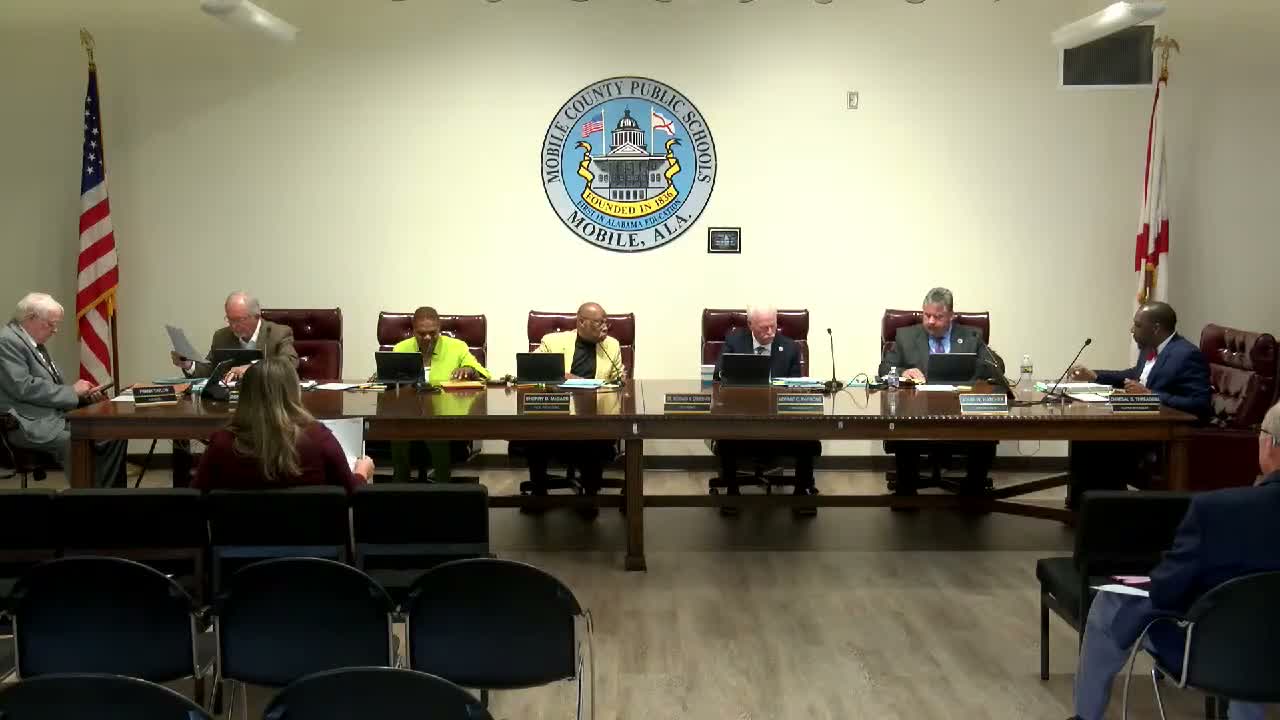
A Mobile County Public Schools board member urged the board to install cameras in all classrooms and to place restoring prayer in schools on a future agenda, saying classroom video had been “very instrumental” in helping law enforcement after an incident the speaker identified as at "Ella Grande." Speaker 5 told the board, "I would love to have cameras put in all the classrooms," and asked that prayer be afforded to students as it is for board meetings.
Board legal counsel and the superintendent cautioned that organized prayer in public school classrooms implicates the First Amendment. Speaker 6 said, “as far as actual prayer in schools... it’s illegal because it’s a violation of the First Amendment,” and noted that districts pursuing classroom prayer are often involved in litigation. Board members repeatedly referenced past court rulings and said other districts pursuing similar policies are being litigated now.
Other board members described voluntary, student-led prayer that already occurs outside the classroom. Speaker 4 said students gather around the flagpole before school for voluntary prayer, emphasizing those events are student-organized and occur with parental permission: “Those are the children's choice... it’s not organized by teachers.” Several members suggested a moment of silence for individual reflection would be less legally risky than reinstating an organized classroom prayer.
The board did not take formal action to reinstate prayer at the meeting. Instead, during adoption of the agenda the board directed the superintendent and counsel to "look into the calls with the attorney" and to "look at the legal ramifications of privacy" and related issues, asking staff to return with written guidance and options for the board to consider.
The discussion also included claims about classroom cameras: Speaker 5 said cameras already placed in special-education classrooms had aided law enforcement and student relief, while Speaker 6 answered that some camera placements in special-education settings were required by law (as described in the meeting). The board did not approve a districtwide camera installation at this meeting; members asked staff to research legal, privacy and procedural implications and report back.