Get Full Government Meeting Transcripts, Videos, & Alerts Forever!
Get email alerts on the Capital Improvements topic
No spam. Unsubscribe anytime.
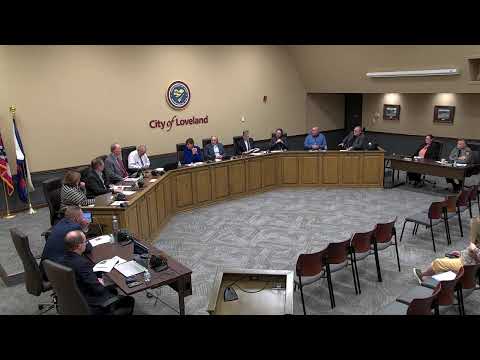
Loveland City Council reviews proposed 2026 Capital Improvement Program
Summary
City staff presented a $7.5 million draft 2026 CIP emphasizing pedestrian projects, road work, PFAS treatment design, cybersecurity, parks and targeted downtown improvements; much of the plan depends on grant funding and coordinated utility work for timelines.
Loveland City Council on Tuesday heard a staff presentation on the proposed 2026 Capital Improvement Program, which totals about $7.5 million and targets sidewalks, road maintenance, water treatment design and other infrastructure projects.
City Manager Dave Kennedy outlined how public input, master plans and biennial council goals shape the CIP and said staff and finance work together to allocate costs across roughly 30 different city funds. Finance Director Mark (first referenced as Mark, finance director) and City Engineer Kelsey Richards were credited for helping secure and manage grants that fund many projects.
Staff said the two largest planned investments are pedestrian improvements and work on Loveland Madera Road. Phase 1 of Loveland Madera Road will begin utility relocation this year and begin sidewalk construction in 2026 from Castle Skateland to the city limits; a mid‑block crossing at the Kroger entrance was restored after internal funding adjustments. Project staff warned that utility coordination — chiefly with Duke Energy and ODOT — is essential to maintaining schedules.
The annual road program will draw from six funds. Staff referenced a 2019 Stantec pavement study that recommended $880,000 per year; since that report the city has averaged roughly $982,821 annually on roads and spent about $5,999,750 (not including 2026) on repairs and reconstruction, enabling full‑subdivision work rather than single‑street repairs.
Parks and facility work includes near‑complete schematic design and federal Land and Water Conservation Fund grant agreement for Nisbet Park, restroom renovations (grant dependent), and improvements to the public works campus and storage buildings. Staff also described a planned downtown business directory and a low‑cost curb and sidewalk project on North Carl Brown Way that would form a downtown loop and use downtown TIF funds.
Information technology and cybersecurity were included in the CIP as non‑tangible capital: staff described a vendor engagement with Velocore for penetration testing and endpoint security, with about $95,000 planned for 2026 split across city funds to bolster protections across city hall, police and fire operations.
Councilors praised the presentation, asked about utility sequencing and staffing impacts, and noted the importance of multi‑year planning. The council took no formal action on the CIP during the meeting; the session closed with a separate procedural motion to adjourn that passed 7–0.