Get Full Government Meeting Transcripts, Videos, & Alerts Forever!
Get email alerts on the Land Use topic
No spam. Unsubscribe anytime.
Johnson County panel denies two-lot Dollar General subdivision over UDO, safety concerns
Summary
The Johnson County Advisory Plan Commission denied P‑1‑25, a two‑lot preliminary plat for RSVR East 300 South Road intended to include a Dollar General, citing a new Unified Development Ordinance 10‑acre standard and public safety concerns about traffic and septic suitability. The vote was 5–2; staff will prepare findings of fact.
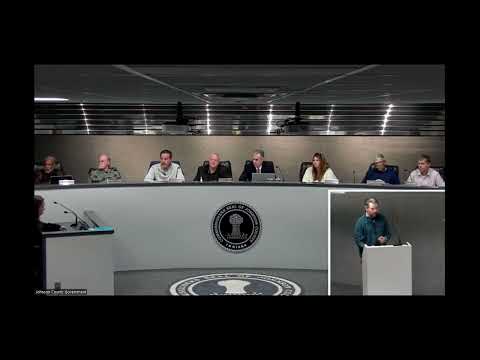
The Johnson County Advisory Plan Commission voted 5–2 on Oct. 27 to deny preliminary plat P‑1‑25 (RSVR East 300 South Road), a proposed two‑lot commercial subdivision that the petitioner said would accommodate a Dollar General.
The commission’s Presiding officer opened a continued public hearing on the 5.23‑acre site in Blue River Township and heard staff and public testimony before the vote. Planning staff told the panel the parcel is zoned General Commercial and that technical reviews by the highway department, drainage board and planning engineer had produced approvals or no objections. "It is 5.23 acres," staff said, and the proposal showed Lot 1 at about 2 acres and Lot 2 at about 2.72 acres with a proposed shared septic easement.
Why the commission denied it
Neighbors and county experts urged denial on two primary grounds: they said the subdivision conflicts with the county’s recently adopted Unified Development Ordinance (UDO) and poses public‑safety and septic‑system risks. Neighbor Dave Edder cited UDO table provisions he said require a 10‑acre minimum for commercial subdivisions and said the plat misidentifies adjacent property owners and lacked appropriate state highway review. "This goes against the county's UDO," Edder said, arguing the application should not proceed.
Retired county wastewater specialist John Bonset told the commission the site soils are heavy clay, compacted and seasonally wet — conditions he called high risk for a shared septic design. "This is a real challenge. It's a risk," Bonset said, urging the commission to reject the project rather than accept a high‑risk septic arrangement.
Petitioner’s case and staff response
Dave Peters of Chamblin & Associates, representing Overland Engineering and S & R Properties LLC, said the design includes a shared septic system with existing tanks pumping to new tanks and a new leach field, a maintenance agreement between owners, and on‑site traffic counts prepared following the INDOT design manual. "Dollar General store is the plan," Peters said, and he noted the highway department had not required road improvements based on the submitted traffic study.
Planning staff explained that the 10‑acre language is a new "minimum development size" standard adopted with the UDO in October 2024, and that the petition was filed after that adoption. Staff outlined that the commission may consider a waiver or modification if formally requested in writing but that, absent a submitted waiver and given public concerns about safety and ordinance compliance, denial was a reasonable option.
Vote and next steps
Commissioner Stoney Van moved to deny P‑1‑25 for failure to comply with the UDO’s 10‑acre provision; Shaylee Bradley seconded. The roll call vote was Shaylee Bradley (yes), Charlie Canary (yes), Douglas Gray (yes), Steve Hickman (no), Jonathan Myers (yes), Robert Page (no) and Stoney Van (yes), producing a 5–2 vote to deny. The commission directed staff to prepare findings of fact reflecting the reasons stated in the record for adoption at the next meeting. The presiding officer and staff accepted a letter from the State Department of Health into the record at a remonstrant’s request.
The commission also recorded that the time for appealing the decision will not begin to run until the findings of fact are adopted at the next meeting. No final development approvals or waivers were granted at the Oct. 27 session.
Context and what to watch
The decision turns on a recently adopted UDO standard and on local testimony about traffic safety and septic feasibility. The next meeting will include staff‑prepared findings of fact; that document will set the official basis for any appeal and may state whether a formal waiver request could be entertained in a future proceeding.