
Cannon Falls council approves data center conditional use permit and development agreement after hours of debate
Get AI-powered insights, summaries, and transcripts
Subscribe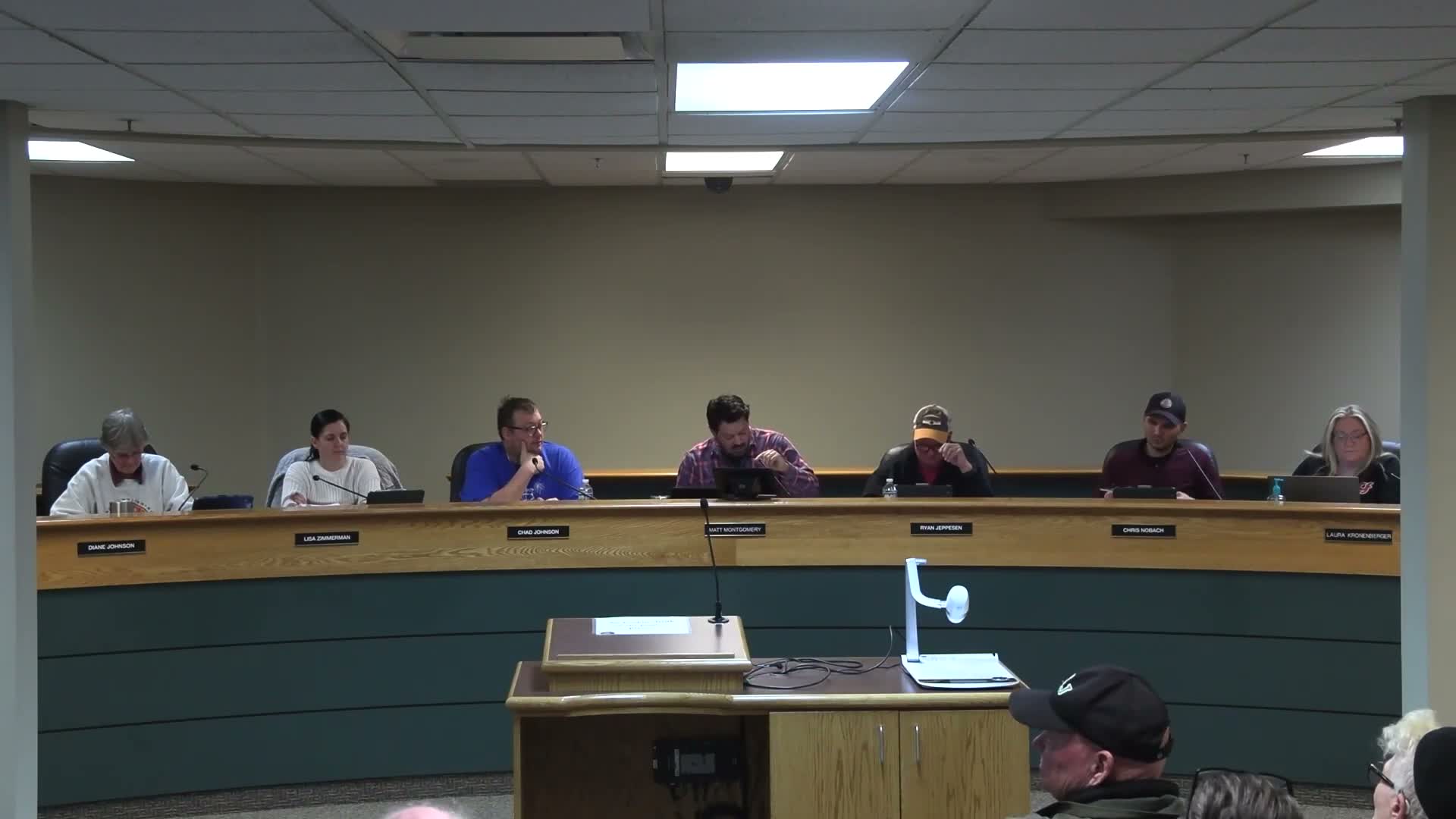
Summary
After nearly two hours of public comment and a lengthy staff presentation addressing water, noise and finance, the Cannon Falls City Council on Nov. 5 approved a conditional use permit and a development agreement for the Cannon Falls Technology Park data center by 4-2 roll-call votes.
The Cannon Falls City Council voted 4-2 on Nov. 5 to approve a conditional use permit (CUP) and a companion development agreement allowing a proposed TRAC data center to proceed in the city’s newly annexed industrial park. The measures passed after a long public comment period and a staff presentation that detailed water allocations, noise standards, utility responsibilities and payments to the local school district.
City administrator John (first introduced during the meeting) walked the council and the public through the project timeline and the environmental and regulatory steps taken since October 2024, including an AUAR (alternative urban area-wide review), an EQB notice process and multiple council and planning commission work sessions. He said the council’s CUP includes enforceable conditions tied to MPCA noise limits and DNR oversight where applicable.
On water and capacity, staff said the city’s DNR permit authorizes roughly 250 million gallons per year; the development agreement allocates up to 43 million gallons per year to the project at full build-out in 2035 with an initial phase beginning in 2029. The agreement also preserves irrigator permits until development proceeds and requires DNR approval to convert irrigation permits to industrial use. John said emergency water use would be temporary and that residents’ needs would take priority in severe drought or critical infrastructure failure.
On finance and infrastructure, TRAC agreed to fund nearly all on-site and off-site infrastructure: staff described developer commitments of roughly $5 million toward a new water tower and related mains, $1.6 million for wastewater improvements, and payment of sewer/water access-related capital charges. The council and staff emphasized the developer will pay for substation and transmission upgrades through Dakota Electric; the city said it will not be fronting those capital costs.
The development agreement includes a payment-in-lieu-of-taxes (PILOT) for Cannon Falls Area Schools of $500,000 a year, increasing by $15,000 annually; staff said the first payment is expected at final plat and that the arrangement depends on existing state sales-tax exemptions for eligible capital purchases. Superintendent Jeff Sampson and Clinton Shofquist, board chair for Cannon Falls Area Schools, both addressed the council in support of the agreement and credited the funds with helping close a long-running budget gap.
Opponents urged caution. More than a dozen residents raised concerns during the public comment period about noise, potential well impacts, unproven community benefits, and the pace of negotiations. Several asked the council to pause the project and require a full Environmental Impact Statement (EIS) through the Minnesota EQB; some referenced lawsuits involving data-center projects elsewhere. Tammy Reichert warned council members their votes would be a lasting part of local history; Dean Kautz and others urged a more comprehensive environmental review before approval.
Council members debated those concerns but said many issues were addressed in the CUP conditions and the development agreement. The CUP (Resolution 2836) passed on a roll-call vote with Jepsen, Novak, Cronenberg and Chad Johnson voting yes; Diane Johnson and Zimmerman voted no. The related TRAC development agreement passed by the same margin later in the meeting after council requested a roll-call vote.
What happens next: staff said site plans, final plats and building permits will return to council and that the city will publicly bid construction work. If state agencies require additional environmental review or an EIS as the project advances, staff said those steps would be completed before later approvals could proceed.
Key quotes from the meeting include Clinton Shofquist: “That is $13,000,000 over the course of 20 years that will go directly towards our kids’ education” and John (city staff) summarizing water terms: “The net effect of that is 2,000,000 gallons per year — the equivalent of 34 single-family homes.” The council’s votes mean the project now moves into site-plan and permitting phases under the conditions the city negotiated.
The council adjourned after routine reports and a short consent agenda.