Get Full Government Meeting Transcripts, Videos, & Alerts Forever!
Get email alerts on the Emergency Funding topic
No spam. Unsubscribe anytime.
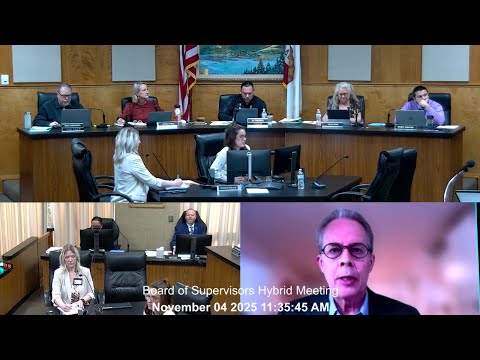
Lake County approves $80,000 in emergency hunger relief as CalFresh benefits are delayed
Summary
The Board of Supervisors voted 5–0 to authorize $40,000 per week for two weeks (total $80,000) in administrative funds to support local meal providers and food distribution while SNAP/CalFresh November benefits remain delayed; the board also created an ad hoc work group to oversee distribution and program partners.
The Lake County Board of Supervisors voted unanimously to approve $80,000 in one‑time administrative funding to provide short‑term hunger relief while SNAP/CalFresh benefits for November remain delayed. The board authorized $40,000 per week for two weeks to support community meal providers, grocery‑bag distributions, and emergency supplies such as MREs, with staff and community partners tasked with rapid implementation.
Social Services Director Rachel Dillman Parsons told the board county staff had drafted plans to limit funding to direct food purchases and to use Memoranda of Understanding (MOUs) with local service organizations to speed distribution. Parsons said county staff would verify recipients through existing CalFresh case lists and assist deliveries for elderly or disabled residents; she recommended using local providers and noted the county will not pay staff time from the emergency pool. "The money would ideally be spent just on the food," Parsons said.
Board members discussed distribution models and procurement constraints. Supervisors emphasized geographic equity — noting 44% of the county's CalFresh recipients live in the Clear Lake area — and asked that funds be prioritized to agencies that could expand existing meal services and reach other areas such as Lakeport, Kelseyville and Middletown. The board directed that purchasing ordinances still apply, and Parsons said the county would solicit quick quotes and use expedited MOUs where permitted.
Supervisor (speaker 5) moved to approve the funding and Supervisor (speaker 6) seconded; Chair Bridal called the vote and the motion carried 5–0. The board also approved formation of an ad hoc hunger‑relief work group, with membership to include county staff and community stakeholders (behavioral health, public health, grocery store representatives, service organizations and education partners) to finalize operational details. The chair and Director Parsons were directed to finalize the membership list.
County staff noted these funds are non‑reimbursable: Parsons warned that USDA and Cal OES would not repay counties that backfill benefits, and that FEMA would not provide usual disaster assistance for this type of program, so the county would absorb costs. Staff also said some discretionary district funds and an available $25,000 budget adjustment could be applied to the effort if the board wished to expand the pool. The board agreed to reassess the program at the next meeting and left the option to convene a special meeting if the situation worsened.