Get Full Government Meeting Transcripts, Videos, & Alerts Forever!
Get email alerts on the Fee Schedule topic
No spam. Unsubscribe anytime.
St. Louis County board advances 2026 fee schedule after brief debate over solid‑waste charges
Summary
The St. Louis County Board moved the proposed 2026 fee schedule forward after a public hearing and brief commissioner Q&A. Staff said most fees are unchanged, some increases are inflation‑driven and a $9.019 environmental/service fee was adjusted to stabilize future capital needs for solid‑waste projects.
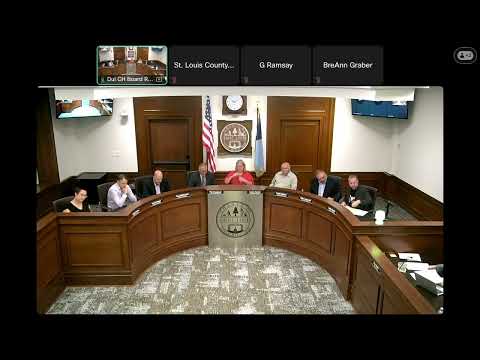
St. Louis County administrators presented the proposed 2026 fee schedule and the county board moved it forward after a public hearing and committee discussion.
Deputy Director Bree Graber, speaking for administration, said most fees remain unchanged but that some line items reflect inflation and the cost of providing services. She highlighted new rental fees for depot balcony space and noted that some environmental fees decreased because of higher contract volumes with regional partners. Graber told commissioners the packet shows current 2025 fees and the proposed 2026 changes and that subcommittee recommendations informed specific adjustments.
Commissioner Grimm asked about municipal solid‑waste (MSW) per‑ton charges, noting a change appearing to move a $7.50 per‑ton tipping component toward a higher per‑parcel charge. Graber and Commissioner Nelson, chair of the mixed solid‑waste subcommittee, explained the design: “we're shifting…not increasing,” Nelson said, describing a strategy to shift revenue onto a $9.019 fee so the county can retain more money locally, reduce tipping pressure, and build a capital reserve for future integrated solid‑waste and leachate facilities.
Deputy Director Graber told the board the fee format was redesigned for readability and that many small adjustments reflect either inflation or cost recovery for staff time and services such as planning, recorder fees tied to confidentiality statutes, and recreation parcel charges.
After public‑hearing procedures were read and no members of the public spoke in opposition during that segment, Commissioner Nelson moved to transmit/approve the fee schedule proposal; the motion was seconded and the board voted verbally in favor. The chair announced the motion carried.
Next steps: Administration indicated the full 2026 budget will be adopted in December and that the fee schedule is one part of ongoing budget development work.