Get Full Government Meeting Transcripts, Videos, & Alerts Forever!
Get email alerts on the Public Safety Survey topic
No spam. Unsubscribe anytime.
New survey: 67% of Nashvillians say they feel safe despite concerns about property and rising crime
Summary
The Nashville Police & Public Safety Alliance reported results of a 1,050-person survey showing 67% of respondents feel Nashville is safe, while many expressed rising concern for property and neighborhood differences in perceptions and support for solutions such as more gun regulation and youth programs.
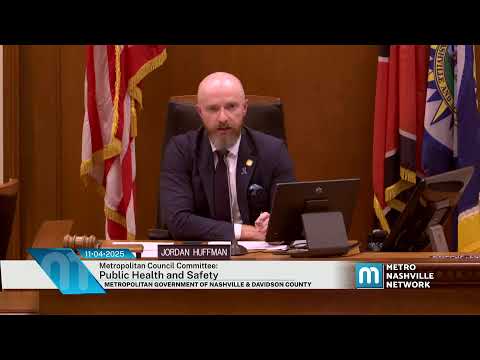
The Nashville Police & Public Safety Alliance presented results of its second annual public-safety sentiment survey to the Public Health & Safety Committee on Nov. 4, reporting mixed views: a majority said they feel safe in Nashville, but many reported concerns about property crime and a perception that crime is rising.
Pat Shea, CEO and founder of the Alliance, said the survey (conducted Sept. 2–14 by Impact Research) interviewed 1,050 Nashvillians and was conducted in English and Spanish, with an overall margin of error the presenters described as ±3 percentage points at a 95% confidence level. The Alliance said the data are available by 13 neighborhoods defined by Imagine Nashville and that the full report is posted at nashvillealliance.org.
Helene Genas, presenting the findings, told the committee that 67% of respondents reported they feel Nashville is safe. However, 58% reported concern for personal property in the past year (a 17% increase from last year), and roughly 33% reported concerns for personal safety in the prior year. The presenters also reported that 58% of respondents believe crime is rising overall, and that perceptions vary between citywide views and neighborhood-level experiences.
Respondents identified poverty, gun availability, lenient sentencing and homelessness as significant contributing factors to crime. When asked about policy approaches, 23% of respondents most often supported more gun regulation (with higher support among Black respondents over age 65 and among women), while 17% favored stricter jail sentences; the survey also found strong support for youth programs, police training and criminal-justice reforms.
Pat Shea said the Alliance intends the survey to complement the public-safety dashboard released earlier this year and offered to present the neighborhood-level findings to community groups and precinct organizations. Chair Huffman thanked the presenters and encouraged colleagues to review the neighborhood breakdowns for planning and policy uses.
The committee received the presentation and raised no formal objection; the Alliance indicated it will provide the full dataset and neighborhood breakdowns to council members.