Get Full Government Meeting Transcripts, Videos, & Alerts Forever!
Get email alerts on the Land Use topic
No spam. Unsubscribe anytime.
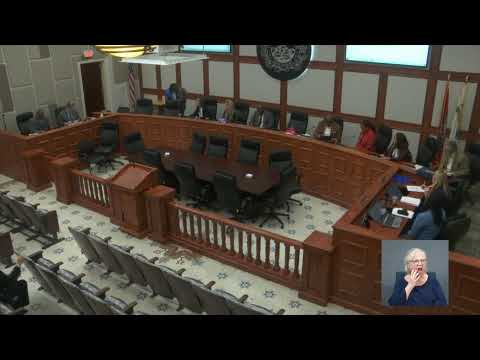
Little Rock board upholds Planning Commission approval for proposed therapeutic community after lengthy public hearing
Summary
After more than an hour of public testimony both opposing and supporting the project, the Little Rock City Board of Directors voted Oct. 21 not to rescind a Planning Commission approval allowing a therapeutic community facility at 9621 Tall Timber Blvd; the rescind motion fell short of the six votes required to overturn.
The Little Rock City Board of Directors on Oct. 21 declined to rescind a Planning Commission approval for a proposed therapeutic community facility at 9621 Tall Timber Boulevard, meaning the Planning Commission’s prior conditional‑use permit stands.
The vote followed a lengthy public hearing in which neighbors raised concerns about crime, traffic and property values while the applicant and supporters presented legal and programmatic defenses. The rescind resolution received five affirmative votes and three opposing votes; city attorney Tom Carpenter explained a motion to rescind requires six affirmative votes to succeed, so the Planning Commission’s decision was upheld.
Why it matters: The proposal, advanced by an operator known in the hearing as the Gardens, would convert a vacant 6‑acre former church into a heavily regulated residential program for people with intellectual, developmental and behavioral‑health diagnoses. The facility, the applicant said, would be limited by the Department of Human Services to 16 residents with eight staff on site (a stated 2:1 staff‑to‑resident ratio) and would include on‑site security and daily treatment records. Residents and neighborhood leaders said the site’s placement at the subdivision entry would create safety and traffic risks and could depress home values; supporters and a planning‑process defender said the application complied with local zoning rules and that opposition often reflected stigma against people with disabilities.
What speakers said: Ashley Hudson, representing the Gardens, told the board, “This is not a detox facility… These are people with some disabilities and some challenges who are seeking to improve their lives.” Hudson said the operator’s Sherwood and Texarkana sites have not produced the crime patterns opponents predicted and stressed regulatory oversight, citing ADA, HIPAA, CMS and the Fair Housing Act.
Several neighbors disagreed. Denise White, a Pecan Lake resident and mortgage loan officer, said she was “highly opposed to this facility being put in our neighborhood” and presented an incident report she said involved a related facility in June 2025. Other speakers, including longtime residents and the Tall Timber HOA president, pressed traffic, emergency‑response and site‑suitability concerns.
Legal and procedural context: Jeremiah Russell, an architect and public‑servant who supported the development, urged the board to deny the appeal and allow the Planning Commission’s lawful action to stand. He described the lot as roughly 7.2 acres with significant buffers and argued the application followed required procedures. City attorney Tom Carpenter and planning staff reminded the board that land‑use decisions may not be based on the nature of a prospective resident’s disability and that federal and state civil‑rights protections constrain a denial based on the occupants’ characteristics. Carpenter explained the board needs six affirmative votes to rescind a Planning Commission decision; the board recorded five votes in favor of rescission and three opposed, so the rescind motion failed and the Planning Commission approval remains effective.
Numbers and conditions cited at the hearing: the applicant described the site as roughly 6 acres, limited to 16 residents by DHS, staffed by 8 employees, with 24‑hour security offered; the Planning Commission and staff recommended approval under the city’s O‑3 conditional‑use rules.
Next steps: Because the board did not secure the six votes needed to overturn, the Planning Commission’s conditional‑use permit stands. Opponents were told after the meeting that they may speak with absent directors or pursue other legal avenues; the transcript records no subsequent board action on the item at this meeting.