Get Full Government Meeting Transcripts, Videos, & Alerts Forever!
Get email alerts on the Governance Reform topic
No spam. Unsubscribe anytime.
Butte-Silver Bow study commission votes to forward ballot measures on shrinking commission and evaluating mayoral role
Summary
The commission voted unanimously to ask that measures be drafted for the Nov. 2026 ballot to reduce the number of county commissioners and to evaluate whether the mayor should be an elected at-large office, appointed by commissioners, or a ceremonial position; the working group will draft language and related analysis.
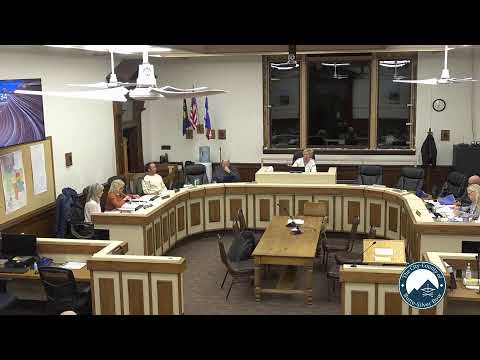
The Butte-Silver Bow Study Commission voted unanimously on Nov. 3 to ask staff and its working group to prepare ballot measures that would (1) reduce the number of county commissioners and (2) evaluate the office of mayor, including whether the mayor should be elected at large, appointed by commissioners, or have only ceremonial duties.
Mary McCormick, a member of the study commission, moved that the measures be approved for consideration as ballot questions and that the working group already drafting city-county manager language take on the related research and drafting. Cindy Shaw seconded the motion; the commission approved it unanimously.
Why it matters: commissioners said the items are closely linked — changes in the structure of the legislative body affect how a chief executive or city-county manager would interact with the commission and whether a separate mayor makes sense. Commissioners and public commenters repeatedly raised representation and accountability as central concerns.
Commissioners cited public survey data presented at the meeting as part of their rationale. “It seems pretty obvious: 63% think there’s too many,” Commissioner Cindy Shaw said while referencing the report distributed by staff. Commissioners discussed several alternatives, including a hybrid model (some members elected at large, others by district), strictly district-based representation, and smaller odd-numbered commissions intended to reduce ties in votes.
County attorney Matt Enruth told the commission his office wants to be involved when the group begins drafting ballot language to ensure statutory requirements are met. “There are certain things in the statute that have to be specifically worded when they’re going on the ballot,” Enruth said, and offered to join at the language stage to reduce the risk of legal defects.
Several commissioners emphasized protections for rural representation and concerns about at-large models concentrating seats in denser neighborhoods. Commissioner Chad Silk warned that at-large elections can leave out Uptown and rural areas; others proposed redistricting options based on existing election districts or hybrid systems to preserve geographic diversity.
If voters approve changes in November 2026, commissioners noted that state law provides a 90-day window after the election to develop a transition plan for phasing in new terms and districts. Lori Casey, who leads one of the working groups, said the group would return with evaluation criteria, draft language, and options for term staggering and transition timing.
The commission’s action directs staff and the working group to prepare the measures and associated materials for public review and for legal review by the county attorney’s office.
Next steps: the working group will produce draft language and background analysis for review; if placed on the ballot and approved by voters, the commission will have the statutory 90 days to adopt a transition plan.