
Boulder Arts Commission approves 2026 cultural grants program, delegates administrative approvals to staff
Get AI-powered insights, summaries, and transcripts
Sign Up Free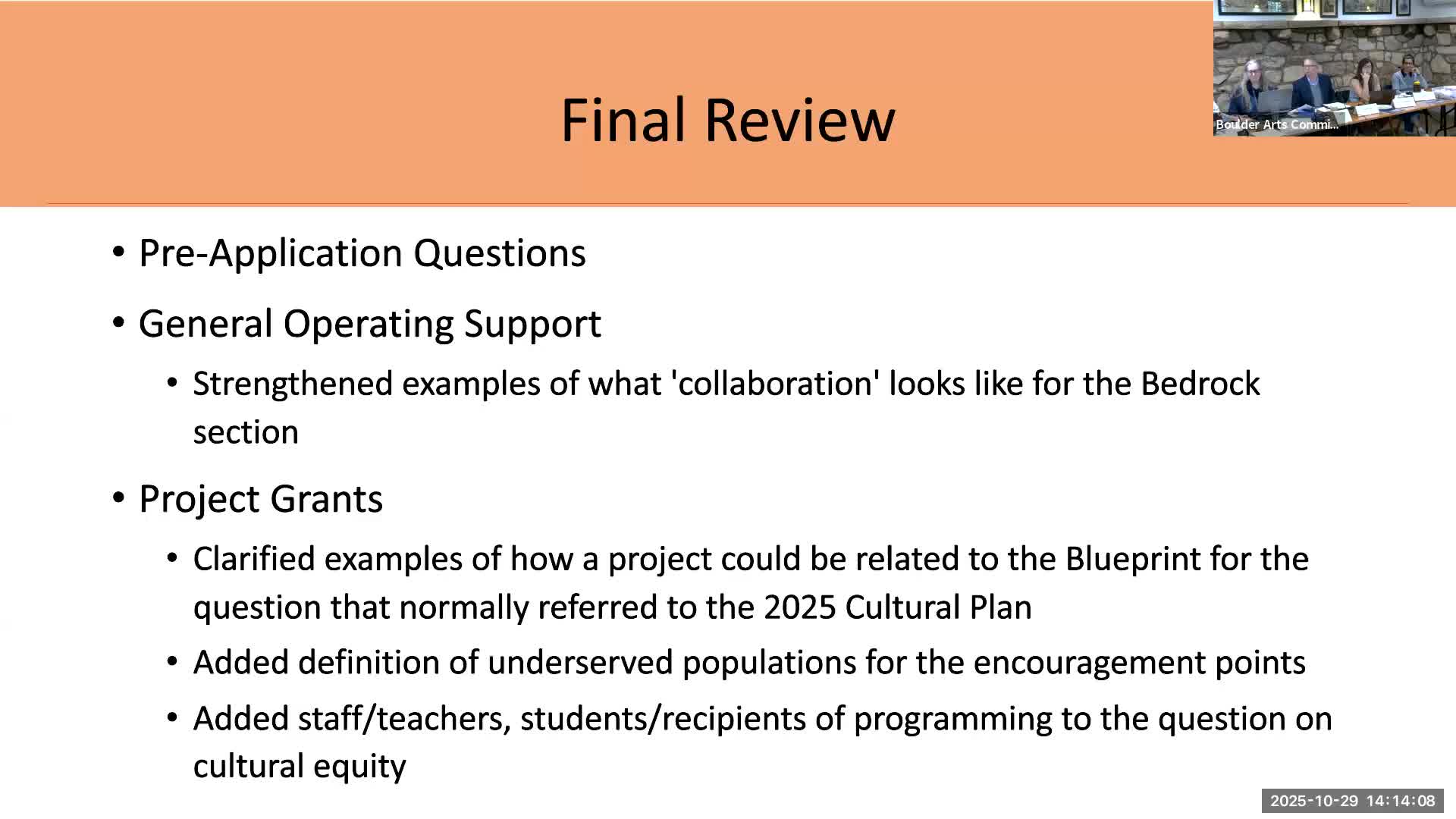
Summary
The commission approved the 2026 cultural grants program structure and budget, broadened scoring for underserved populations, and authorized staff to make administrative awards for small, first‑come grants.
The Boulder Arts Commission on Oct. 20 approved the city’s 2026 cultural grants program, endorsing staff recommendations on process, schedule, application questions and a scoring system that expands encouragement points beyond a BIPOC focus to a broader definition of underserved populations.
The action followed staff presentations and community feedback collected during phase 1 of the Boulder Arts Blueprint. Sarah Harrison, grants program manager, told commissioners the program revisions include clearer collaboration criteria and three added application questions intended to improve review consistency. “We’ve refined the grant direction for ’26,” Harrison said during the meeting.
Commissioners discussed minor budget clarifications in one grantee’s report (Community Roots/Viva Theater) and asked staff to request updated liquor‑license documentation after October events. The commission moved to approve four grant reports and then to adopt the broader 2026 program structure; both motions passed unanimously.
The commission also voted to delegate administrative authority to staff for several first‑come grant categories, including artist hiring grants, cultural field trips, grant‑writing assistance, professional development scholarships, fee waivers and rental assistance for Boulder venues. That delegation is intended to speed payments and reduce review burden for smaller awards while preserving competitive review for larger grants.
Why it matters: the program change shifts how the city scores and steers public dollars toward equity and local impact, and the administrative delegation is meant to accelerate funding flow for smaller, time‑sensitive requests. Staff will provide an administrative summary report back to the commission so members can review what was approved under delegated authority.
Next steps: staff will publish the updated application materials, host a bilingual grant information session on Nov. 12, and run a funding opportunities summit on Dec. 5. The commission will continue to monitor implementation and ask applicants for clarifying budget updates where needed.