
Columbus County adopts 20‑ to 30‑year Comprehensive Transportation Plan
Get AI-powered insights, summaries, and transcripts
Subscribe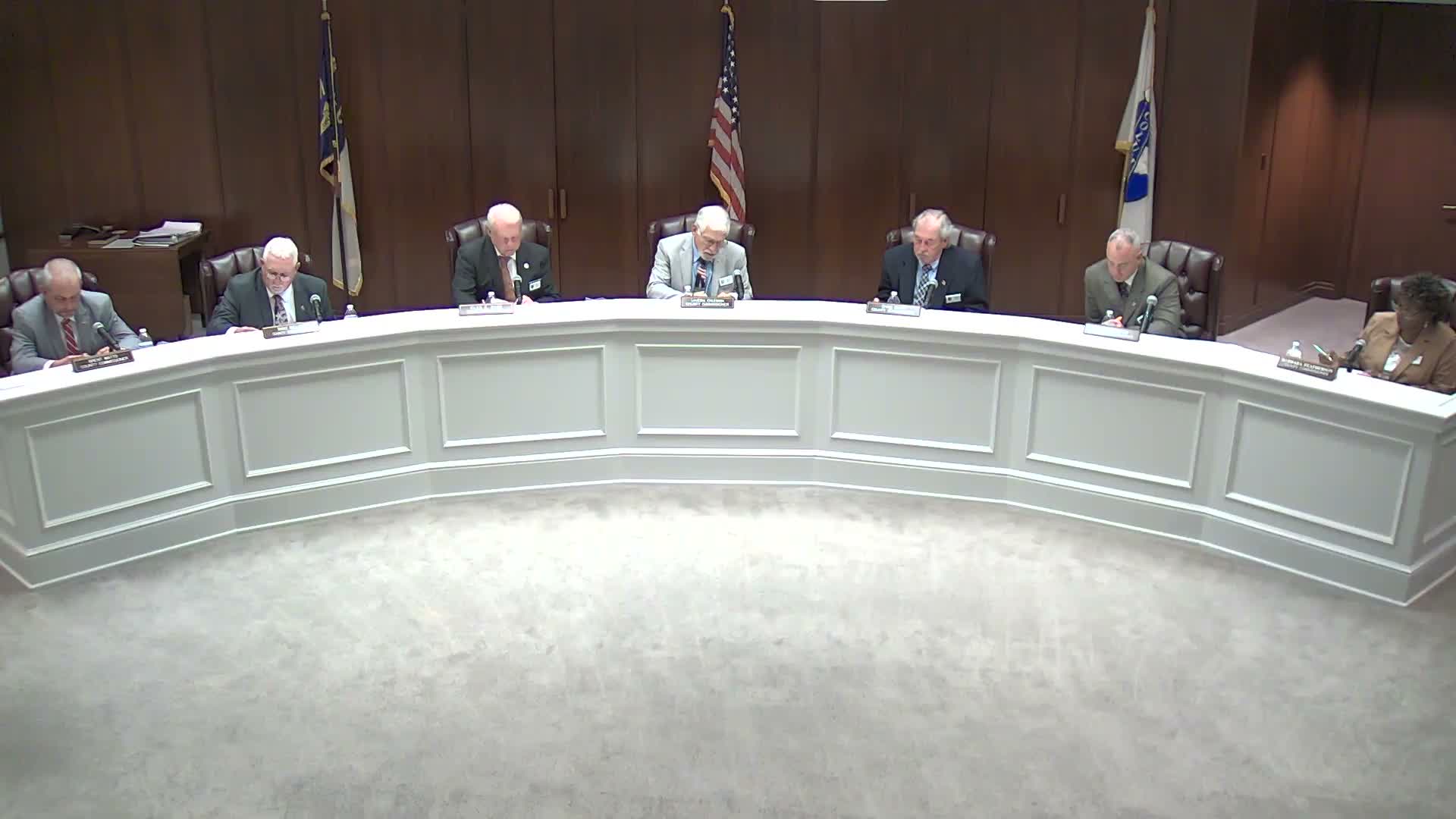
Summary
The Columbus County Board of Commissioners voted to adopt a countywide Comprehensive Transportation Plan (CTP) presented by the Cape Fear Council of Governments, a needs‑based, long‑range multimodal blueprint that will guide project prioritization, funding requests and local land‑use decisions over the next two to three decades.
Sam Boswell, senior regional planner with the Cape Fear Council of Governments, presented the Columbus County Comprehensive Transportation Plan (CTP) and the board adopted the associated resolution by voice vote.
"A CTP ... is a needs based, long range, multimodal transportation plan," Boswell said, explaining the plan covers a 20‑ to 30‑year horizon and identifies congestion, safety hot spots and modal needs for cars, bicyclists, pedestrians, rail and public transit. He emphasized the CTP identifies system needs rather than committing the county to specific construction projects immediately.
Boswell described the CTP maps included in the presentation: a 2021 base‑year volume‑to‑capacity map, a 2045 future projection, high‑frequency crash maps, modal facility maps and pedestrian and bicycle recommendations. He said the plan flags several corridors — including U.S. 74 and stretches of U.S. 701 and NC 410 — as high‑priority for capacity or safety work and noted the Whiteville‑to‑Wilmington rail connection remains on long‑range lists but faces large cost obstacles.
Commissioners asked about the feasibility of restoring rail on an existing rail bed and about specific bottlenecks. Boswell said rail projects may be submitted for state prioritization but are expensive and will compete with other projects. He also said recent district reviews flagged NC 410 as a corridor with increased traffic that needs to be reflected in maintenance and improvement planning.
The board adopted the resolution to approve the CTP after questions and discussion. County officials said they will use the plan to identify candidate projects for NCDOT prioritization, for grant applications, and to inform local land‑use decisions.
The resolution’s approval means the plan will serve as the county’s guiding document for transportation needs; staff said project‑level design, funding and construction will follow later through the usual NCDOT and grant prioritization processes.