Get Full Government Meeting Transcripts, Videos, & Alerts Forever!
Get email alerts on the Stormwater topic
No spam. Unsubscribe anytime.
Panama City engineers outline stormwater inventory, options for utility fee and green-infrastructure incentives
Summary
City engineers briefed the commission on the state of Panama City's drainage network and presented options to fund capacity projects, including a possible implementation of the existing stormwater utility code or a fee-in-lieu program.
City engineers briefed the commission on the condition of Panama City's drainage network and options to fund repairs and capacity projects, including implementing the city's existing stormwater utility code.
In a detailed presentation, city engineer Stacy Rausch said staff found nearly 6,000 stormwater inlets in GIS, about 900 manholes, more than 150 miles of drainage pipe and 167 ponds recorded as city-owned, plus more than 200 private ponds that feed the system. She told commissioners the annual streets and drainage budget is roughly $1.53 million, with only about $55,000 earmarked for materials.
Why it matters: Commissioners said stormwater capacity and funding affect downtown redevelopment, historic districts and neighborhoods vulnerable to flooding. Several commissioners favored a targeted in-lieu program or credits for green infrastructure rather than a broad new tax or flat assessment.
What staff proposed Rausch reviewed how the city's 1991 stormwater utility code allocates charges by ERU (equivalent residential units) and impervious area and described implementation options: a traditional utility fee, regional ponds with capacity sales, capital contributions in lieu of on-site facilities, and earmarked utility funds that could pay for maintenance, dredging and capital projects. She proposed a 5-to-10-year reevaluation period if the commission moves to implement fees.
Benchmarking and revenue examples Staff cited nearby jurisdictions: Bay County (flat-rate model bringing about $1.8 million annually), Lynn Haven (tiered, impervious-based ERU model yielding about $1.7 million) and Panama City Beach (a valuation-based assessment bringing about $1.5 million). City staff noted different local models allocate utility funds to varying mixes of maintenance and projects.
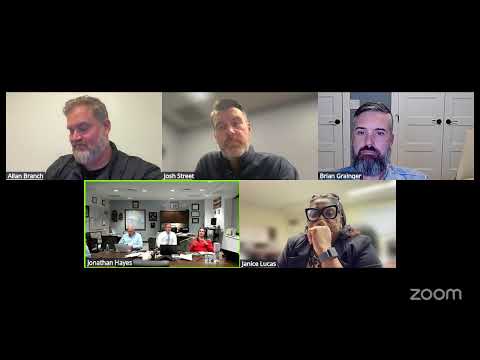
Commissioner concerns and alternative ideas Several commissioners objected to introducing a new city-wide tax or assessment without clear linkage and public education. Commissioner Josh Street and others recommended a fee-in-lieu program to let developers buy capacity credits for regional ponds and to use utility funds strategically for priority projects in redevelopment areas. "What I would be looking for and supportive of is a stormwater management utility in lieu of program," Street said.
Commissioners and the mayor also urged incentives for green infrastructure, tree planting and low-impact designs; they asked staff to bring back concrete policy language, credit mechanisms and cost estimates for targeted programs, particularly for areas with small lots or historic districts where on-site ponds are impractical.
Next steps Staff said the briefing was for feedback and recommended follow-up huddles to distill commissioner priorities; commissioners asked for proposals they could review ahead of the next budget process. No formal decision or vote was taken at the workshop.