
Dare County opposes proposed blue‑crab restrictions, urges updated stock assessment and better data collection
Get AI-powered insights, summaries, and transcripts
Sign Up Free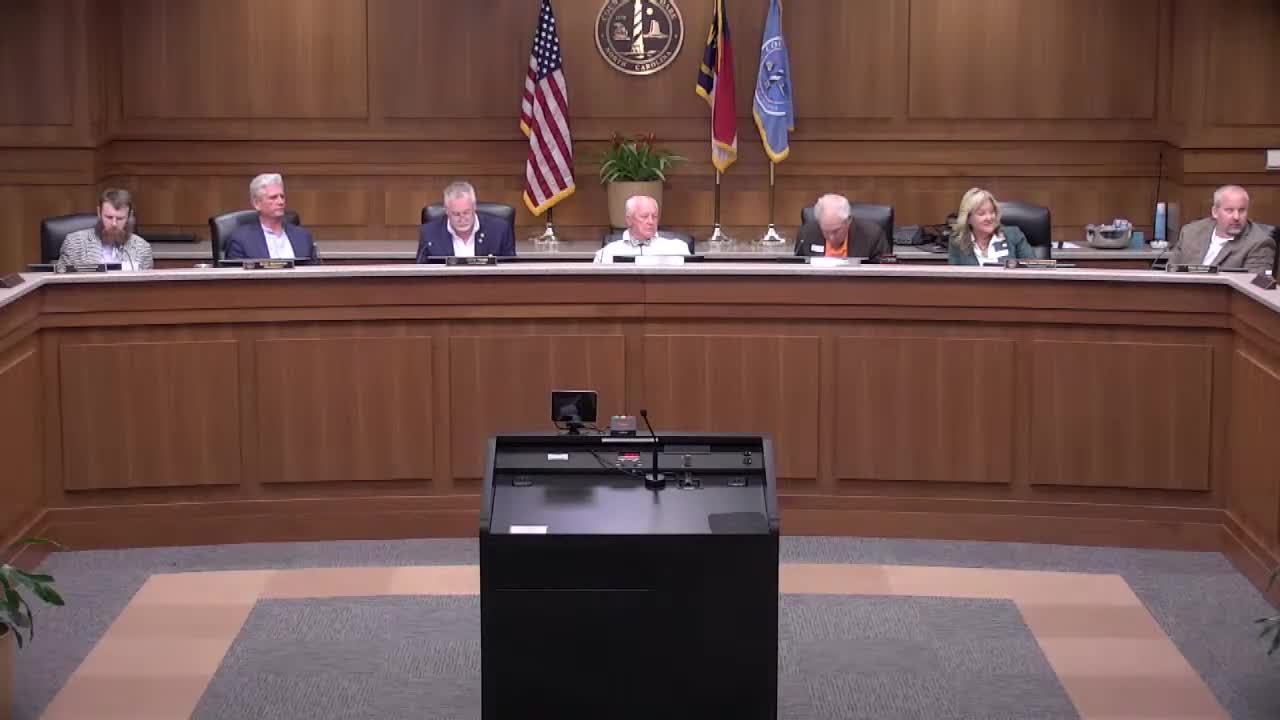
Summary
The board unanimously adopted a resolution opposing proposed five‑month closures or a 10‑bushel limit for blue crabs, citing reliance on an outdated 2018 stock assessment and urging NCDMF to improve data collection and delay restrictions until a 2026 assessment is complete.
Dare County commissioners voted unanimously Nov. 3 to oppose proposed harvest restrictions on the blue‑crab fishery and to press for an updated stock assessment and improved data collection before any new limits are imposed.
"We strongly oppose any further restrictions to the blue crab fishery until the 2026 stock assessment is completed," said Commissioner Bateman when introducing the county's resolution. The board said the most recent comprehensive biomass assessment relied on 2018 data and that the Division of Marine Fisheries' trip‑ticket analysis may not reflect pot‑based harvest patterns or variable water conditions.
The resolution calls on the Division of Marine Fisheries to use up‑to‑date stock science and to incorporate direct fishery observations — for example, by allowing NCDMF biologists to ride along with crabbers — before implementing closures or per‑day harvest caps. Commissioners cited concerns that a proposed five‑month closure or a rigid 10‑bushel limit could cause substantial economic harm to local commercial crabbers and coastal communities.
The board said many local advisory committees recommended maintaining the status quo until the new assessment is complete and urged the county's coastal counties coalition to adopt the same position when members meet later this week.
Separately, commissioners discussed a new state rule requiring reporting of single‑fish recreational harvests for certain species (red drum, flounder, spotted sea trout, striped bass and weakfish). Commissioners and fishermen expressed skepticism about compliance and the accuracy of self‑reported, online recreational submissions.
The board pledged to forward the resolution to the coalition and to continue outreach with state fishery staff to seek improved data methods and clearer impact analyses before regulatory action.