Get Full Government Meeting Transcripts, Videos, & Alerts Forever!
Get email alerts on the Public Safety topic
No spam. Unsubscribe anytime.
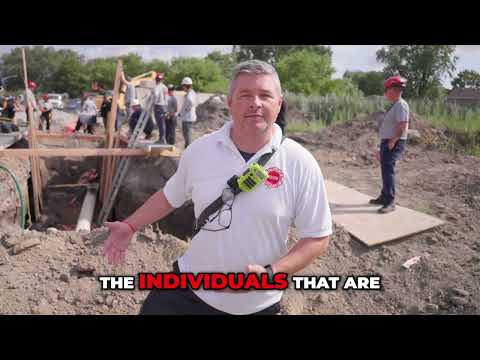
Dolton and regional fire departments run trench‑rescue drills at Public Works
Summary
Dolton Fire Department and mutual‑aid partners conducted trench‑rescue and sidewalk‑collapse drills at Dolton Public Works as part of a CART monthly training series. Exercises focused on stabilizing trench walls, using trench boxes, and coordinating multi‑agency rescues for two simulated victims.
Dolton — Dolton Fire Department and mutual‑aid partners from Park Forest and Calumet City ran coordinated trench‑rescue drills at Dolton Public Works as part of the Combined Area Response Team’s (CART) monthly training series.
The drills, trainers said, simulated scenarios common during public‑works operations: an initial training scenario introduced by Captain Pete McCain and a second exercise led by Lieutenant Adam Farri that replicated a sewer and sidewalk collapse trapping a worker under roughly 100 pounds of wet dirt. "Today was our second trench rescue training with the combined area response team," Lieutenant Adam Farri said, describing the exercise and his role.
The session emphasized scene stabilization as the first priority before entry. An unnamed Dolton firefighter outlined the scenario: during water‑main repairs public‑works employees can become trapped, so crews practiced extracting two victims while preventing secondary collapse. "So you're simulating getting 2 victims out of a trench area where there is further collapse," the firefighter said, summarizing the drill objective.
Trainers narrated step‑by‑step procedures: stabilizing trench walls, erecting a trench box to shore the excavation, cross‑bracing, and creating a protected access zone so rescuers can reach and remove injured workers without risking additional collapse. The event narrative stressed that teams must "stabilize first, then send rescuers in," and described how careful reinforcement and clear communications governed each move.
Organizers said the exercises tested both rescue and recovery priorities under time pressure and reinforced interagency communication. The narrator noted that multiple agencies from Park Forest to Calumet City participated to strengthen regional teamwork and mutual‑aid coordination.
Event materials and trainers framed the monthly CART series as realistic, hands‑on preparation intended to save lives and reduce costs for municipalities by ensuring crews are practiced in swift, safe responses. The drills recorded were described as the second installment in the series.
No formal policy changes or votes were taken during the training; organizers described the event as operational preparedness rather than a legislative or procurement action. The program is planned as an ongoing monthly training exercise to maintain responder readiness.