Get Full Government Meeting Transcripts, Videos, & Alerts Forever!
Get email alerts on the Gender And Equine Culture topic
No spam. Unsubscribe anytime.
Author Karen Weniger frames question: why do horses attract disproportionately more women?
Summary
At a public panel, Karen Weniger discussed 30 years of reporting behind her book 'Horse Lovers, Unpacking the Female Fascination,' citing American Horse Council data that women make up roughly 70–85% of horse enthusiasts and describing ethnographic and psychological factors she identified.
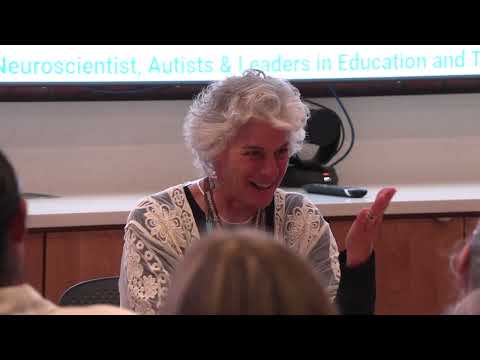
Karen Weniger, author and longtime journalist on equine topics, laid out the central question of her new book to a public audience: why are horses, across many cultures, disproportionately a female attraction? "According to the American Horse Council, some 38,000,000 American households contain horse enthusiasts," Weniger told the audience, citing national participation figures she said informed her research.
Weniger said her reporting — which she described as "adventure‑gated journalism" over some 30 years — combined interviews, historical examples and fieldwork. She summarized the American Horse Council figures she used: about 1.3% of households own a horse, 16% participate without owning, and 13.2% spectate. "Females constitute anywhere from 70 to 85 of those 38,000,000, depending on the source," she said.
Weniger framed possible explanations she explored in the book. Drawing on anthrozoology — the study of human–animal interactions — and interviews with riders worldwide, she argued that early onset affinity, family and cultural patterns, and gendered social roles help explain observed differences. "You are born this way," she said, summarizing the sense of early, instinctive attachment reported by many interviewees.
Panelists and audience members pressed on specific hypotheses: birth order, economic access, and cultural forms of participation. Weniger noted recurring anecdotes — from Scottish common ridings that women fought to join to the crowds she saw at a Madison expo — as qualitative evidence that complemented the statistics. "There was a parade of little girls and parade of teenage girls and the parades of moms and grandmothers," she said of one event where she sold copies of the book.
The panel did not produce a single causal conclusion but highlighted multiple vectors: sociocultural opportunity, material access, and individual psychological patterns. Weniger said readers will need to consult the book for detailed argumentation, while acknowledging open questions about male participation and cross‑cultural variation. The session closed with an invitation to continue the conversation and to attend follow‑up talks and Q&A with panelists.