Get Full Government Meeting Transcripts, Videos, & Alerts Forever!
Get email alerts on the Land Use topic
No spam. Unsubscribe anytime.
Fauquier supervisors approve Bridge Community Church expansion over neighbor objections, 3–2
Summary
The Fauquier County Board of Supervisors voted 3–2 Oct. 19 to approve a special-exception expansion for Bridge Community Church in Marshall, allowing added sanctuary and program space, a 7,200 sq ft multipurpose barn, and 142 new parking spaces after hours of public testimony for and against the project.
The Fauquier County Board of Supervisors on Oct. 19 approved a special-exception application to expand the Bridge Community Church in Marshall, overruling strong neighborhood opposition by a 3–2 vote.
Planning staff summarized the proposal as a Category 6 special exception on a 33.78-acre parcel south of Warrenton that would enlarge the ministry center by about 7,800 square feet, add a 7,200-square-foot barn-style multipurpose building, increase seating capacity and provide 142 additional parking spaces. Staff said conditions attached to approval include a limited hydrogeologic assessment, annual well testing, limits on kitchens (warming only), parking controls with attendants for events over 250 people, monitoring of wastewater systems and a prohibition on amplified outdoor music.
"We are now here because a significant number of people primarily from Fauquier County are choosing more and more to actively exercise the right and freedom to worship," said Greg Hackett, speaking for the church’s owners. Hackett described previous approvals and said the design is intended to retain a rural appearance and keep expansion within landscape buffers.
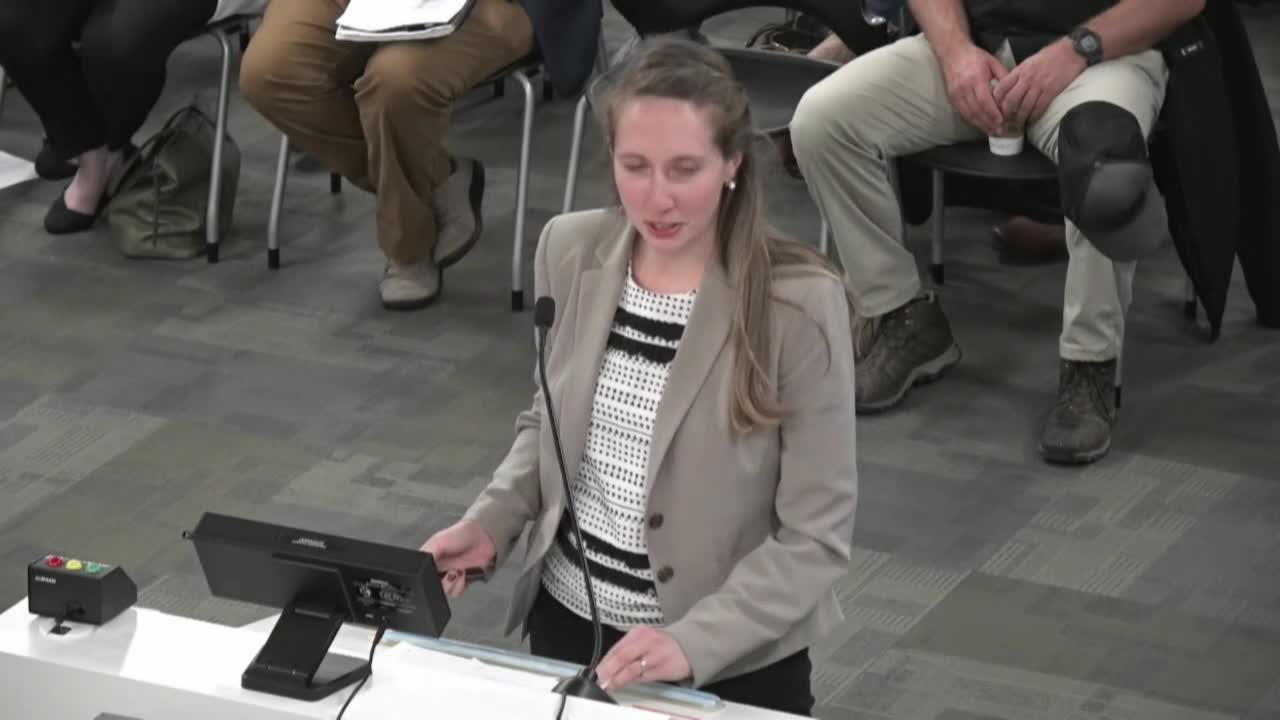
Opponents urged denial, citing scale, groundwater and septic concerns, traffic and precedent for large non-service-district developments. "The building footprint increased 85% from the 2015 initial approval," said Catherine Schulen, a Springs Valley resident. Schulen and other neighbors warned the expansion would harm the area's rural character and property values and questioned the sufficiency of the submitted hydrogeologic work.
Supporters, including church members and beneficiaries of the church’s services, emphasized youth programs, volunteer ministries and public safety contributions. "The Canteen Ministry serves first responders during incidents and needs space to store equipment," said David Cooper, a church member, describing services the church provides across the region.
During deliberations, several supervisors framed the decision strictly as a land-use determination rather than a judgment of the church’s mission. One supervisor who opposed the application said approval could set a precedent allowing large non‑service‑district buildings in rural areas, while several supporters emphasized the community and youth benefits.
After discussion, the board moved and seconded approval. The motion passed on a voice vote recorded as 3 in favor, 2 opposed. The staff presentation noted the Planning Commission had earlier voted 3–2 to recommend denial and that 23 letters of support and eight letters of opposition had been received.
The approval allows the church to proceed subject to the conditions included in the staff report. The board did not detail timing for construction; any permits and site plans must meet VDOT, health and stormwater requirements and the conditions adopted with the special exception.