
RSU 22 board advances multiple policies and flags social‑media language for revision
Get AI-powered insights, summaries, and transcripts
Subscribe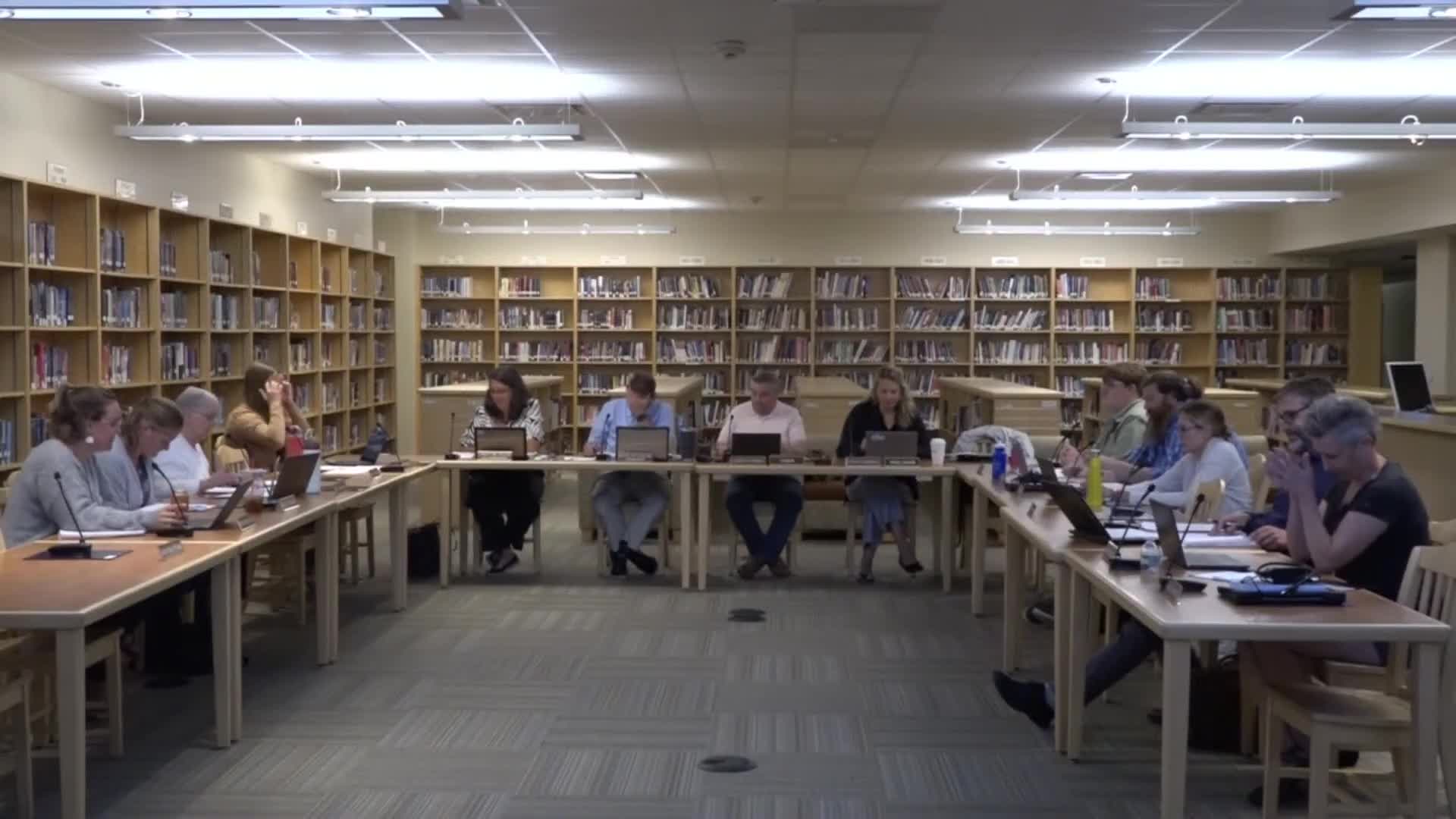
Summary
The RSU 22 Board approved several policy first and second readings unanimously but asked for clarifying edits to the social‑media policy after members warned its language could be read to restrict personal accounts and shift liability.
The RSU 22 Board of Directors on July 16 approved first readings of several policies and completed second readings of its policy process and freedom‑of‑access training policy, while agreeing to tighten language in a draft social‑media rule.
Faye, chair of the policy committee, moved the board to approve for first reading BIA, the new board member orientation handbook, and later presented BP, an image‑management policy governing district logos. "Therefore, the policy committee moves to approve for first reading policy BIA new board member orientation handbook as presented," Faye said. Each of those items passed on voice votes with no dissent.
The meeting’s lengthiest debate centered on policy BED, the board member social‑media policy. Board member Matt said he was "troubled by the third bullet" of the draft because it requires board members to "avoid disclosing confidential or personally identifiable information about students, (including images)," and he warned that as written it could be construed to apply to personal accounts. "I’m still not convinced that the way that it is written…cannot be used inappropriately," Matt said, urging clearer wording to distinguish personal posts from official board communications.
Other members urged attention to intent and FERPA, and the superintendent’s legal counsel and policy committee agreed to seek clarification from MSBA and to refine the language before the second reading. Faye said she would check MSBA guidance and bring proposed edits to the next policy meeting.
The board also moved to delete policy BEE (special procedures for conducting hearings), saying its content is covered under the executive‑session policy, BEC. The board completed second readings and unanimous approvals of BG (school board policy process) and BIC (freedom of access training).
Board members framed the social‑media changes as both a privacy and liability issue: supporters of tighter language said clearer phrasing would reduce risk to the district, while others cautioned against language so strict it would chill personal speech. The committee will refine the BED draft wording and return it for a later reading.
The board’s actions keep the policies on a path toward final adoption; officials said members will be notified of edits and that staff will circulate final drafts before subsequent meetings.