Get Full Government Meeting Transcripts, Videos, & Alerts Forever!
Get email alerts on the Criminal Justice Reentry topic
No spam. Unsubscribe anytime.
Shasta supervisors back exploring Amity Foundation reentry site, direct staff to issue RFP
Summary
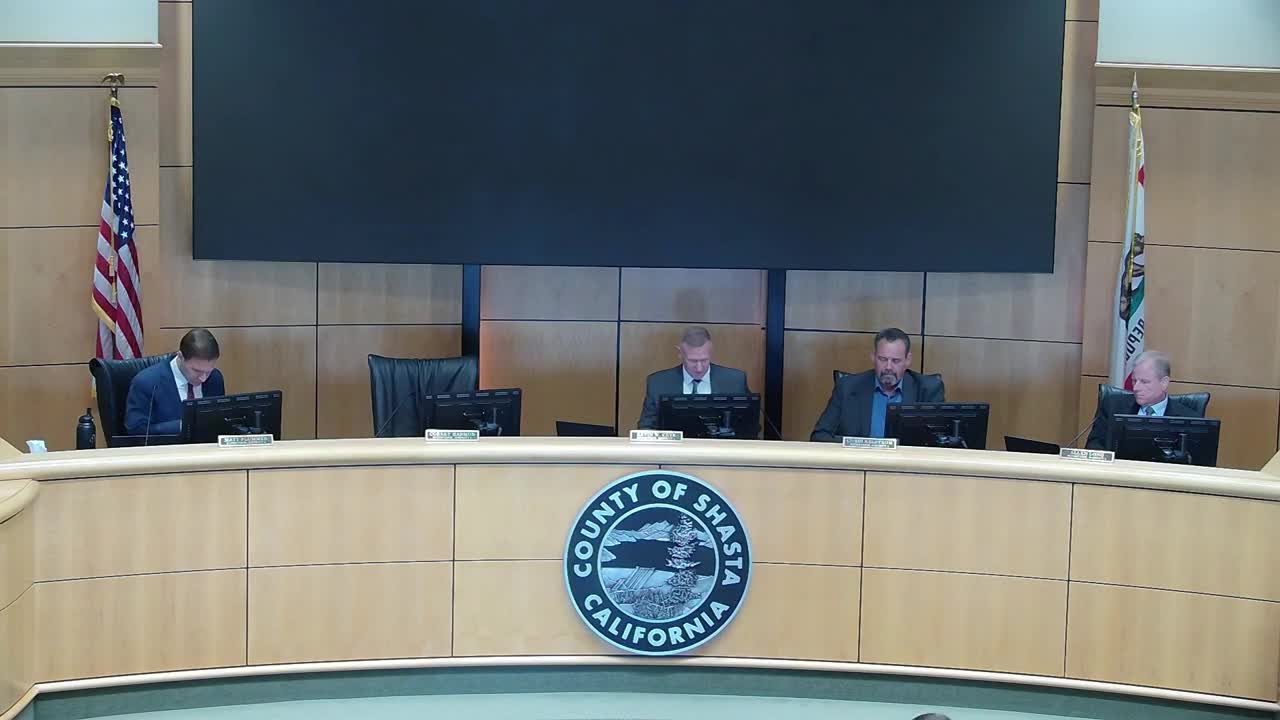
The Shasta County Board of Supervisors voted unanimously Sept. 9 to direct staff to prepare a request for proposals to explore hosting the Amity Foundation’s male community reentry program on a proposed 90‑acre county campus.
The Shasta County Board of Supervisors voted unanimously Sept. 9 to direct county staff to prepare a request for proposals (RFP) to explore hosting the Amity Foundation’s male community reentry program on a 90‑acre campus the county and the city of Redding are coordinating to secure.
Doug Bond, Amity’s president and chief executive officer, described the program as a semi‑secure, residential treatment model that provides up to 32 months of services before and after release from incarceration, including substance‑use treatment, mental‑health services, education and job training. Bond told the board the program uses ankle monitoring and GPS tracking and typically costs “about $63,000 per year” per participant, compared with an estimated $128,000 per year to incarcerate an individual in state custody, figures he said were drawn from recent state budget estimates.
Bond said the program restricts participation to people who meet rigorous criteria (excluding certain sex‑offense convictions, validated gang threats, active felony holds or recent custody misconduct) and that operator case management and on‑site correctional staff maintain public safety. “When somebody leaves, there’s a 99 percent catch rate for an individual” who absconds, Bond said, describing rapid apprehension when monitoring alerts are triggered.
Supervisors pressed for details about how the program would work with local jails and the state. The sheriff reiterated that the larger campus proposal is three projects in one, and said the county would maintain authority to set eligibility standards for any county‑sentenced inmates; the pilot would likely prioritize people with a sufficient remaining term so they could be placed in the residential program for the final months of their sentence.
Supervisor Chris Plummer, who sponsored bringing Amity to the board, said the model offers a way to create space in the county jail for more serious offenders while offering treatment and work pathways for eligible people. He urged staff to thoroughly vet funding pathways and timeline options to expedite a site build if feasible.
Several residents urged caution at public comment, asking for robust neighborhood outreach and clarifying that not all people in custody would be eligible. Supporters said the model has demonstrated reductions in reconviction in other implementations and could connect participants to local employers and six months of rental assistance after program exit.
The board directed the county executive’s office to work with the sheriff and other partners to draft the RFP and seek funding sources; supervisors approved the direction by voice vote 4–0. The board asked staff to return with procurement options and proposed timelines for the proposed campus work.
The next procedural step is a staff‑prepared RFP and budget/funding analysis to be presented to the board for further direction.