Get Full Government Meeting Transcripts, Videos, & Alerts Forever!
Get email alerts on the Housing And Land Use topic
No spam. Unsubscribe anytime.
Greenville County draft open‑space rule draws developers, residents over density and affordability
Summary
At a public session on a draft cluster/open‑space ordinance, developers warned the language could make many sites undevelopable, drive up lot costs and spur sprawl; residents and conservationists urged clearer definitions and joint zoning-review; staff pledged to compile comments and pursue redlines and targeted workshops.
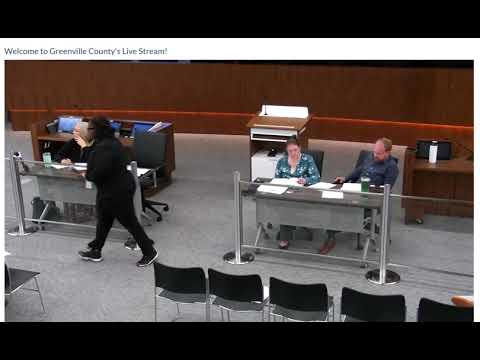
A public input session in Greenville County on a draft cluster (open‑space) ordinance on Nov. 12 drew sustained criticism from builders, developers and some residents who said the draft’s ambiguity would make many parcels effectively undevelopable and worsen housing affordability.
Speaker 1, a land broker who spoke first, said the draft increases per‑lot land costs and risks sprawl by pushing new residents "further out to find affordability." “If 27 people a day are moving here, they are going to live somewhere,” he said, arguing the county must allow higher density near employment centers and existing infrastructure to avoid outward growth.
Why it matters: County speakers and multiple industry participants said the draft’s definitions — notably the phrase "meaningful open space" — are vague, producing inconsistent application by staff and commissioners and unexpected rejections at Planning Commission. Developers said the draft, as written, could leave no buildable acreage on some model sites: planning staff reported that applying the draft in one exercise produced 0.9 houses per acre rather than the 2.9 implied by the underlying zone.
Developers’ case: Jeff Randolph (TRG Communities) and others urged that clustering be framed as a tool for flexibility — to shorten road lengths, reduce stormwater runoff and preserve vegetation — not as a way to add units beyond conventional zoning allowances. Coleman Shouse (Shouse Development) urged redlining the existing ordinance rather than replacing it, warning a wholesale rewrite could effectively set single‑family density at roughly one unit per acre in practice. Michael Hulsey (Meritage Homes) asked whether an advocate for affordability is involved in drafting; he and others pointed to a Pickens County example in which a 315‑unit plan was reduced to 88 under new rules, and said that outcome would push prices higher.
Community and conservation concerns: Sherry Barrett, land‑policy director at Upstate Forever, urged planners to assess whether the draft could shift development into sewered but unzoned areas and thereby weaken environmental protections. Residents and one speaker calling themselves a regular citizen said poorly defined clustering can produce jarring infill outcomes — large, dense buildings immediately abutting long‑time single‑family lots — and asked that citizens participate in shaping the specifics.
County process and next steps: Staff (speaker 6) invited developers to redline the current cluster ordinance (not the draft document) and requested suggested changes "before the 11th" so those edits can be shared with Planning Commission and County Council. Staff also said they will compile written comments, plan small‑group sessions with developers, planners and real‑estate stakeholders, and bring revised language back for further review.
Representative quotes from the session underscored the divide: "This is modern day redlining," said an attendee who urged the county to be honest about who could afford new housing; by contrast, several developers said clustering, correctly applied, can maintain density while reducing disturbance and infrastructure costs.
What’s next: No formal vote was taken. Staff asked participants to submit written comments and said further targeted meetings and workshops will be scheduled to try to reconcile competing priorities — preserving open space and vegetation, keeping housing attainable, and ensuring clear, enforceable ordinance language.