Get Full Government Meeting Transcripts, Videos, & Alerts Forever!
Get email alerts on the Leaf Blower Ordinance topic
No spam. Unsubscribe anytime.
New Canaan committee weighs seasonal ban on gas leaf blowers, debates limits for electric models and enforcement
Summary
On Sept. 29 the New Canaan bylaws and ordinances subcommittee heard public comment and debated a draft ordinance that would ban gas-powered leaf blowers during a summer season and allow limited use of electric blowers; members split over exemptions, hours, enforcement and the timing for implementation.
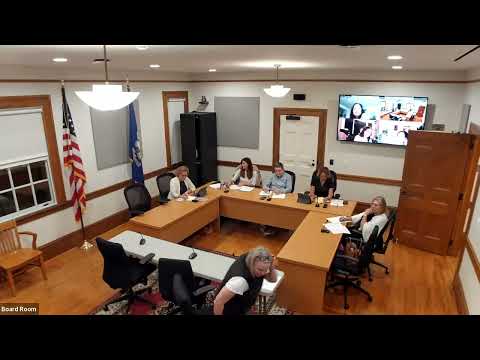
NEW CANAAN, Conn. — Residents urged stricter limits on leaf blowers and committee members debated a compromise on Sept. 29 as the Town Council’s Bylaws & Ordinances Committee reviewed a draft ordinance that would restrict blowers during a summer season.
Hillary Arman, the committee member who prepared the draft, told the committee the measure is intended to "set specific controls on the use of leaf blowers, in particular gas powered leaf blowers," and described the proposal as a starting point for public comment and edits.
Why it matters: speakers from across the town told the committee they hear noise and smell from gas blowers at close range, and several cited health, quality-of-life and competitiveness concerns — noting nearby towns with restrictions. Public commenters and committee members also raised practical questions about how to define the season, who would be exempt, and who would enforce the rule.
What was proposed: Arman’s circulated draft initially defined a "summer season" and would prohibit gas- and electric-powered blowers during that window across residential, commercial and municipal properties. Several members recommended narrowing the ban to gas-powered blowers only and allowing electric devices during a shorter, regulated daily window. One alternative discussed, reflecting edits proposed by a committee member, would allow gas blowers within restricted hours only (example language discussed: Monday–Friday 10 a.m.–4 p.m.; Saturday noon–4 p.m.; no use Sundays) or, conversely, ban gas for the season and allow limited electric use.
Public comment and examples: Residents including Robin Friar, Katie Owsley, Irene Hendricks and Lars Anderson voiced support for restrictions. Friar framed the issue as part of New Canaan’s competitiveness with neighboring towns; Owsley emphasized documented health impacts and suggested incentive programs to help landscapers transition; Hendricks urged clear definitions for emergency exceptions and recommended a phased approach to penalties; Anderson pointed to Pound Ridge and Bedford as useful models for public outreach materials.
Exemptions and special cases: Committee discussion focused on whether to exempt large properties, parks, sports fields and municipal operations. Some members warned that large-acreage exemptions would undercut the ordinance’s purpose; others argued for phased exemptions for municipal equipment and essential services. The draft read aloud by Arman included exceptions for emergency or safety uses, storm cleanup and snow removal, and utility work to restore essential services.
Enforcement and penalties: The draft proposes progressive penalties (first offense: written warning; second offense: $100 fine; third and subsequent offenses: a fine tied to the statutory maximum). Committee members noted state law (cited in the meeting as a statutory reference) constrains maximum fines. A significant procedural issue emerged: a committee member said the New Canaan Police Department is "adamant that they will not enforce this," prompting discussion of designating a municipal enforcement officer or using the building/code or blight enforcement processes instead. The committee discussed phased enforcement — warnings and robust outreach the first summer, with fines phased in later — and possible reporting workflows (anonymous online complaint forms, email or a town hotline) to support enforcement.
Next steps: Arman said she would revise the draft to reflect the committee’s feedback (season dates, exemption language, an approach for electric devices and enforcement language) and circulate a new version. The committee did not take a formal vote on the ordinance; members moved to adjourn and the meeting concluded.
What remains unresolved: The committee did not finalize whether electric blowers will be allowed in the summer, the exact seasonal start/end dates (May 15–Sept. 15 was in the draft; several members suggested Memorial Day–Labor Day or similar holiday-based windows), or the precise enforcement mechanism. Arman and staff will prepare a revised draft and outreach plan for further committee review.
Quotes used in this article are drawn from public comment and committee discussion as recorded in the Sept. 29 meeting transcript. The committee signaled interest in a phased rollout and additional outreach before any enforcement fines are imposed.
The committee will reconvene after the next draft has been circulated; no ordinance was adopted at the Sept. 29 meeting.