Get Full Government Meeting Transcripts, Videos, & Alerts Forever!
Get email alerts on the Agriculture topic
No spam. Unsubscribe anytime.
ND agriculture commissioner warns weak commodity margins, details department programs and disease, weed and market risks
Summary
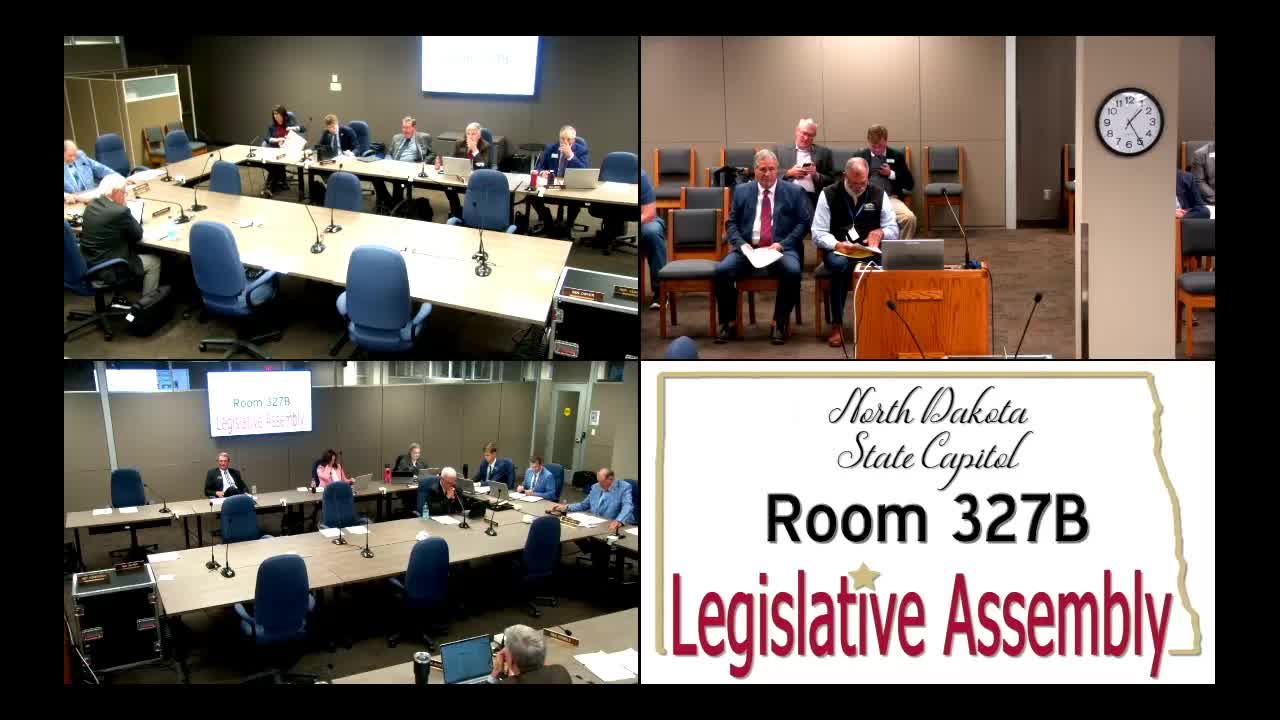
Doug Goring, North Dakota agriculture commissioner, told the Legislative Budget Section that rising costs and global market shifts have left many producers with razor‑thin margins and described the department’s inspection, grant and outreach programs to help farms and processors.
Doug Goring, North Dakota agriculture commissioner, told the Legislative Budget Section that soaring production costs and overproduction in global markets have left many farmers with thin or negative margins.
“Our problem is the cost of production,” Goring said during his presentation to the committee, citing higher prices for inputs, parts and equipment and noting that an average North Dakota soybean break-even is about $10.32 a bushel while current prices are often lower. He gave a concrete example for corn: “The current break even for a bushel of corn is about $3.8. Current prices right now about $3.60.”
Goring said the department is watching several market and policy risks that could worsen the situation: geopolitical slowdowns in large buyers such as China; import flows that can flood U.S. markets when trade resumes; and federal biofuels exemptions that reduce the benefits of renewable-fuel demand. He warned that small‑refiner exemptions to the Renewable Fuel Standard have undercut intended biofuel support.
Why it matters: The presentation connected market signals and long-term policy shifts to the county-level reality of tighter farm finances. Committee members pressed the commissioner about trade, livestock imports and whether federal programs are reaching producers who fall “in-between” existing crop‑insurance or revenue protections.
What the department runs: Goring walked the committee through the agency’s organizational chart and program portfolio. Highlights included:
- Plant Industries: inspections, pollinator‑plan leadership used by other states, phytosanitary certificates for export and hemp/CBD licensing and inspections. - Livestock and Licensing: dairy and poultry inspections, meat‑processing and state inspection programs, assistance to new slaughter establishments, and licensing for grain warehouses, roving buyers and grain brokers. - Grants and programs: regional livestock planning grants ($500 per township/$12,000 per county), livestock‑friendly counties effort, an autonomous-technology (UAS) grant pilot for mapping invasive weeds (Palmer amaranth and waterhemp) with AI elements, specialty-crop block grants, food distribution facility grants and value‑added infrastructure grants.
Goring described work the department has done to help private parties and counties comply with state zoning and livestock‑related ordinances, and said the agency has identified multiple townships and counties with ordinances that do not align with state model language; in those cases staff notify the attorney general but have limited enforcement authority.
Disease, safety and inspections: The department runs animal‑health programs (USAHerds traceability, chronic wasting disease work, avian influenza testing and response, bovine tuberculosis eradication) and encourages vaccination where spores persist in soil; Goring confirmed anthrax remains a concern in some areas. The agency also enforces pesticide and fertilizer registration under FIFRA, conducts groundwater testing and investigates pesticide‑use complaints.
Ombudsman and dispute work: Goring said the royalty-ombudsman and pipeline-ombudsman efforts have reduced complaints and sped company responses in many cases but do not, and were never intended to, replace court remedies. He described those programs as largely successful at opening communication and avoiding litigation where possible.
One-time funding and transfers: The commissioner told the committee that the state transferred $3,000,000 out of the Bioscience Innovation Grant Fund after some grantees failed to submit required reports; he said that decision followed statutory direction and left about $1 million originally intended for another round unspent.
Committee reaction and next steps: Members asked for follow-up data on pet‑food manufacturers (the department later reported 13 manufacturers) and pressed for options to provide counties or landowners clearer zoning guidance. Several members asked staff to consider whether the committee should pursue legislative fixes to give the state more enforcement options for zoning noncompliance.
Ending: Goring left the committee with a list of potential technical follow-ups and offered additional detail on any program the panel wanted to explore further. The section recessed before taking up the tax commissioner’s presentation.