Get Full Government Meeting Transcripts, Videos, & Alerts Forever!
Get email alerts on the Budget topic
No spam. Unsubscribe anytime.
Manhattan adopts 2026 budget, approves property-tax rate above revenue-neutral level
Summary
After hours of public comment about affordability and city priorities, the Manhattan City Commission approved a 2026 budget and 2026–2030 CIP and adopted a property-tax rate exceeding the revenue-neutral rate; the budget passed 4–1 and staff said the increase funds COLA, debt adjustments and maintenance.
The Manhattan City Commission on Sept. 16 adopted the city’s 2026 budget and a five-year capital improvement program and approved levying a property-tax rate that exceeds the revenue-neutral rate. The budget and CIP passed on separate roll calls; the budget ordinance and CIP resolution passed 4–1, with Commissioner Mota dissenting.
City finance and management staff told the commission the proposed 1.35-mill net levy increase includes a 1.088-mill adjustment tied to the RCPD fund to account for anticipated delinquencies, plus 0.216 mills to support a 2.4% cost-of-living adjustment for most city employees. Staff said the city projects roughly $167 million in total revenue for 2026 and described the general fund as having about a 1% margin of excess—"really tight when you're looking at a $38,000,000 budget," staff said during the presentation.
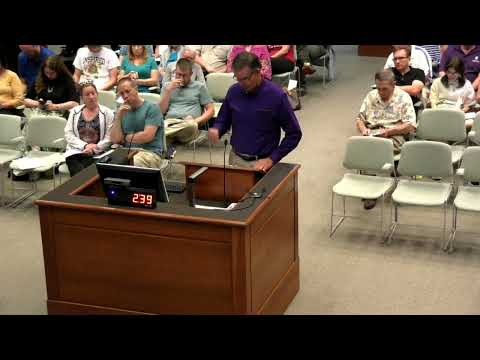
Residents who spoke during the budget hearing said the increase would harm renters, seniors and fixed-income households and called for spending restraint. "We're not gonna take it anymore," said longtime resident Gary Oles, warning of voter backlash in November. Other speakers detailed personal hardship, rising delinquencies and objections to using property-tax increases to cover debts or new projects.
Commissioners debated options including reducing COLA, using reserves or redirecting revenues. Commissioner Mitten proposed an override-motion-style approach for a different agenda item but during deliberations several commissioners emphasized competing priorities: maintaining services, addressing deferred maintenance and preserving reserve balances. On the roll call to adopt the budget and CIP (Ordinance No. 7,772; Resolution No. 091625-C), the motion carried 4–1.
Staff listed key revenue and expenditure assumptions: a 3% increase to water and wastewater rates, a 6% stormwater rate increase, conservative 1.5% sales-tax growth, and an anticipated $2.47 million in additional ad-valorem revenue (about $1.46M attributed to assessed-value growth and roughly $1.01M attributed to the proposed mill increase). The library requested a 0.046-mill increase; the RCPD adjustment was presented as part of a multi-year effort to budget for delinquencies in that fund.
City leaders said the adopted budget preserves current service levels and funds several capital priorities but leaves a small operating cushion. The commission’s action completes the statutory budget process for 2026; staff said they will continue quarterly monitoring and report back if revenues fall short or unexpected expenditures arise.