Get Full Government Meeting Transcripts, Videos, & Alerts Forever!
Get email alerts on the Personal Testimony topic
No spam. Unsubscribe anytime.
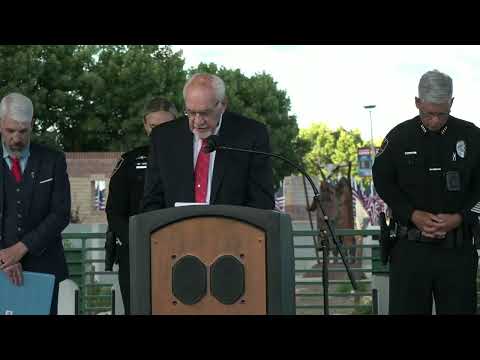
Former NYC peace officer recounts 9/11 chaos and response at Prescott Valley memorial
Summary
At Prescott Valley's Healing Fields ceremony, Leon Moyse, a retired U.S. Marine and former New York City peace officer, described his experience on Sept. 11, 2001 — from being rushed to precinct command, to seeing collapse and mass casualties, to later joining the Marine Corps.
At Prescott Valley's 14th annual Healing Fields, Leon Moyse, introduced as a local business owner, retired U.S. Marine and former New York City peace officer, gave a personal, on-the-ground account of Sept. 11, 2001.
Moyse described being summoned to the 122nd Precinct in Staten Island the morning of the attacks and being told "we were under attack." He recalled being put on buses to the Staten Island Ferry Terminal, watching the towers burning across the river and witnessing the first tower collapse. "I remember people screaming. I remember my body burning," Moyse said, recounting the immediate chaos and confusion at the scene.
Moyse described operational details he encountered: staging body bags for transport to the 20 Ninth Street morgue, coordinating with multiple agencies on-site, and performing long security shifts — "running guard" for months — while families searched for missing loved ones. He said personnel performed DNA testing and that the scale of casualties and dislocation changed responders' lives. Moyse said the experience ultimately prompted him to join the Marine Corps later that year.
His account was part of a program that also presented recorded final messages from victims and remarks from local leaders. Moyse’s testimony emphasized the personal and communal toll of the attacks and the bonds that formed among responders and civilian survivors.