Get Full Government Meeting Transcripts, Videos, & Alerts Forever!
Get email alerts on the Resident Advisory Committee topic
No spam. Unsubscribe anytime.
Syracuse committee weighs dissolving resident advisory board after ethics opinion
Summary
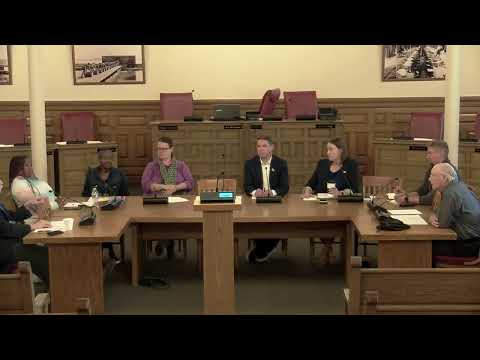
Members of the Syracuse Housing Strategies Corporation Governance Committee on Tuesday considered whether to keep a statutory Resident Advisory Committee after staff relayed a unanimous legal opinion that committee members would be subject to the same ethics and open‑meetings rules as board members.
Members of the Syracuse Housing Strategies Corporation Governance Committee on Tuesday considered whether to keep a statutory Resident Advisory Committee after staff relayed a unanimous legal opinion that committee members would be subject to the same ethics and open‑meetings rules as board members.
"We at this point have gotten a firm and unanimous opinion from everyone that the ethics provisions that apply to all board members and staff of the Housing Strategies Corporation would apply to any members of the Resident Advisory Committee," Michelle (staff member, Neighborhood and Business Development) told the committee, adding that the ruling would bar committee members from applying for funds for the duration of a term and for two years after.
The opinion forced the committee to weigh two options: dissolve the statutory advisory committee and continue community engagement informally through Neighborhood and Business Development, or keep the committee but explicitly notify appointees about the limitations and enforce them. "There's other ways that we could go about doing community engagement that would get us to the same place," Michelle said, describing informal neighborhood convenings and steering committees as alternatives.
Council members and the mayor debated trade‑offs. One member said a formal advisory body could provide housing expertise beyond neighborhood representation; another argued that neighborhood voices were essential. "It has to be neighborhood," Speaker 3 emphasized, while Speaker 4 suggested a panel of housing experts could be useful for long‑term planning.
Mayor (speaker 1) directed staff to loop in corporation counsel and the councilors to clarify whether rewriting the ordinance could preserve the committee’s intent without triggering the restrictions. "I'll get an email going with Corp Council and ... councilors and see if we can get this squared away," the mayor said, asking for clarity within a week.
The committee did not take a final vote. Staff presented the two paths and will return with corporation counsel’s guidance and a recommendation on whether to amend the enabling ordinance or to proceed with informal engagement through existing neighborhood associations.